
An earlier version of this piece was published in the April 2021 issue of the Newarker. It is republished here in anticipation of the relaunch of the CSA.
by Evelyn Kalka
“What is a CSA, and why should I care?” Fair question! Community Supported Agriculture (CSA), in its true form, is a way to produce the highest quality of food, e.g., highly nourishing and most flavorful food, in a way that is financially feasible for both the farmer and the consumer. Farms that focus on nourishing the soil rather than depleting it—diverse, small to mid-scale, organic and regenerative farms—have an uphill battle to compete in today’s industrialized food system. You might call them the Don Quixote of food-production. In a CSA, a community of individuals partner with a local farm and sign up for a season of mutual support. Members purchase a ‘share’ of the farm’s produce in advance of the harvest season (during planting season), which allows the farmer to pay wages, purchase seeds and equipment, without taking on costly loans. Members then receive weekly ‘shares’ of produce throughout the harvest season. The direct connection between the farm and its members is at the core of the CSA concept. No middlemen. Members share in the success as well as the risks of the farm and receive produce of a quality unmatched by todays conventional food systems, even “organic.” The bond between the community and the farm allows CSA farmers to be the rebels of the food system and focus on the growing of flavor and nutrition, re-building the soil as they go along.
But cutting out the middle men was not fun for said middle men, and so the term CSA is today often used and abused by buying clubs or other entities that re-sell products sourced from various farms in various places and of various integrity. The middle men, wiggling their way back in, break the direct bond of connection, participation and mutual support between community and farm, the bond that lets a real CSA thrive, reducing the term to mean nothing more than “paying for a weekly box of veggies.”
CSAs first sprang up in New England in the 1980s in reaction to a conventional food system that failed us by depleting soil and stripping nutrients from food, and to food distribution systems and that made it hard for farmers to work outside of said system. The first CSA’s leaned heavily on ideas formulated and implemented earlier, like the concept of Teikei from Japan and communal agriculture concepts developed in Switzerland and Germany, but maybe more directly by the ideas of African-American agriculturalist Booker T. Whatley from Alabama, who’s work in the 1960s, 70s and 80s lead to the CSA
concept and other alternative farming models that side-step modern corporate food production and distribution systems. Whatley, who received his doctoral degree in horticulture from Rutgers University, described “Clientele Membership Clubs,” as “the lifeblood of the [farm]. It enables the farmer to plan production, anticipate demand, and, of course, have a guaranteed market. The farmer has to seek out people—city folks, mostly—to be members of the club.”
A city is always larger than the footprint it inhabits within the official boundaries, and urban centers often connect to the country as a resource to draw on in various ways. In 1899, for example, the City of Newark acquired land about an hour North/North-West of its borders to secure watersheds in the Jersey Highlands, supplying the city with incredible water that once made Newark famous as brewing city nation wide. In return, the land 50 miles out is to this day protected and pristine. City people sourcing the best quality to nourish themselves from soil-rebuilding farms, are an important connection of urban and country, one of mutual benefit. The land nourishes the members and in turn, they sustain it.
But the distance should not be too far, so the connection is tangible and veggies are delivered fresh and quick from the field. Also, members can visit or volunteer if they wish. It is ‘their farm’ after all.
Whatley was also a great advocate for regenerative farming, which is a sustainable farming method beyond organic, focusing on the nourishment of the soil which then in turn nourishes the produce grown in it. This is a quality of food that was available to everyone a little less than 200 years ago, but is nearly impossible to find in today’s world. But you can buy organic at most supermarket, you say? Yes, but most organic foods come from large, if not gigantic monoculture fields, often in California. Swapping out chemical fertilizer with some natural source of fertility and switching to a naturally derived spray material to control insects is certainly a step into the right direction, but unless you are focusing on rebuilding the soil and the wild biodiversity of fungi and bacteria that makes truly living soil just that, you will not be able to grow food that nourishes us to the full extend it did, prior to the event of modern agriculture. And the microbiology of living soil created through regenerative agriculture not only grows plants that are more nutritious, but recent research by organizations like the Rodale Institute, is coming to an understand that rich organic soils like those created through regenerative agriculture tie up significant amounts of carbon dioxide and thus work against climate change. Another plus for the CSA model.
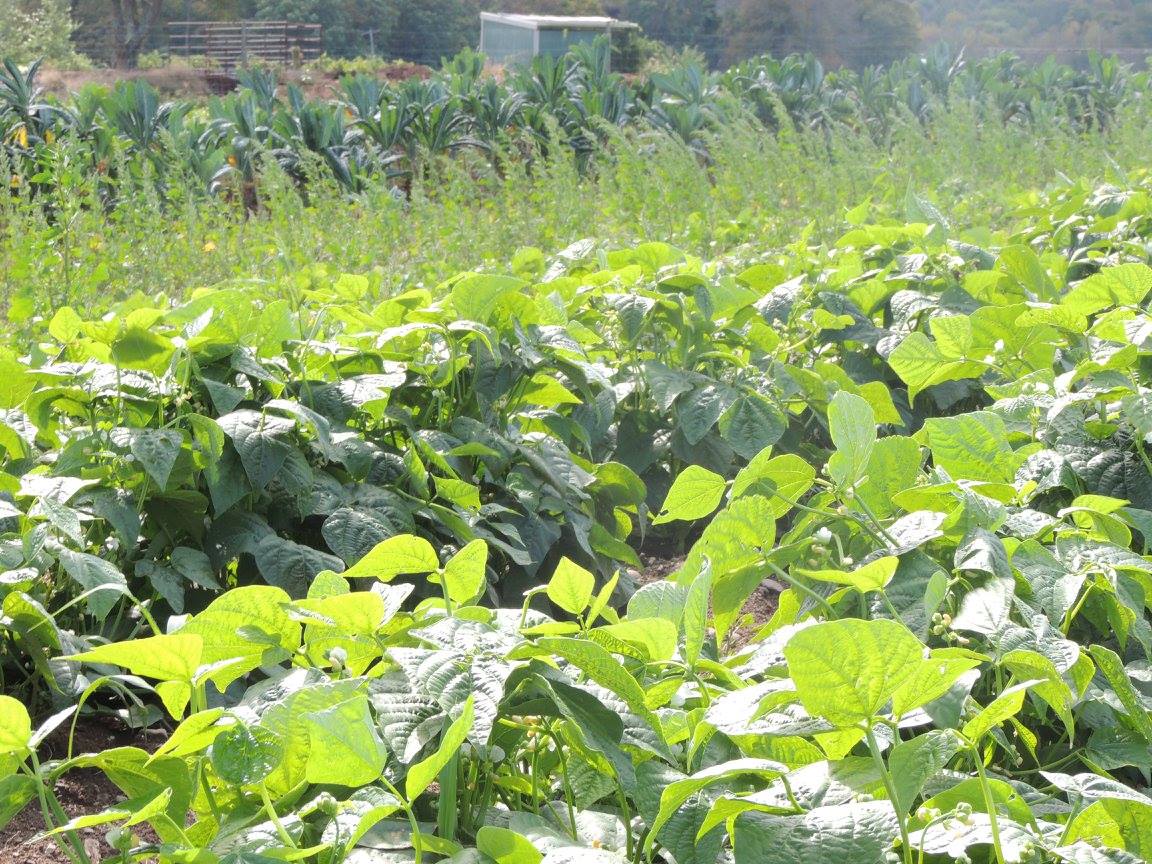
If you are intrigued by the true CSA model, check out CSA Newark, two pick-up sites here in Newark for members of Circle Brook Farm, a certified organic farm, located about 40 miles West/North-West of Newark, in Andover NJ. The farm is run by John Krueger, who focuses on regenerative farming and supplies CSA shares since 2003 to various pick-up locations in New Jersey, starting with Montclair and adding Newark in 2011. CSA Newark, run by volunteers, host two pick-up locations for Circle Book Farm
CSA shares: one in the Ironbound, one in Forest Hill. CSA members purchase their shares directly from the farm in Andover, who grows the veggies and delivers to Newark once a week during the 24-week season. Without the middle men, you get a quality of food beyond organic, the farmer gets a shot of making it financially feasible and the soil will be brought back to what soil used to be. Join CSA Newark and extend Newark’s roots to some 80 Acres of land in Andover, where you nourish the soil that will nourish you in return.
Evelyn Kalka is a resident of Newark and organizes CSA Newark, which hosts weekly pick-ups of Circle Brook Farm CSA shares in the Ironbound and Forest Hill. For more information visit www.csanewark.com.
 The Newarker