
By Dan Elijah Vazquez
Things are getting taller, but better? On the corner of Prospect and Ferry, in front of Sihana, looking out across the street to where Iberia used to be, he asks me,
“Do you know why they called it Babylon?”
No, I don’t know. And I’m not in the mood for one of Ricky’s riddles. But he’s in good spirits. And that beats rage-mode-Ricky.
“I don’t know, Ricky. Why did they call it Babylon?”
Ricky grins from ear to ear. His eyes are wet and shiny in the midday sun.
“Because they just kept—babblin’ on.”
I blink. Ricky’s eyebrows are higher than the lamppost beside him.
“Get it?” Ricky says.
“Got it.” I say. It’s a decent joke. But I don’t want to encourage him.
Where Iberia once buzzed with its mix of neighborhood regulars, office folk from the other side of Newark Penn Station, and out-of-towners visiting “The Rock” or NJPAC, four massive residential buildings now lord over the Ironbound.
Two of them are 26 stories tall. And the other two are 30 stories.
There’s no question. This ain’t Down Neck anymore. The Ironbound District may be bound by iron, but developers are certainly not bound by existing zoning laws. I’m not complaining. Just acknowledging. Everything is changing. Things are getting a lot taller.
But better?
We speak a few languages down here: Spanish, Portuguese (and their unofficial hybrid, Portuñol) and some English when we need to. But even before GoogleTranslate gave us a hand, and Apple intelligence started translating our conversations in real time, there was an understanding between us. While there were plenty of different flags adorning storefronts and apartment windows and a fair share of mutual suspicion and resentment, there were two basic things we held in common: a non-negotiable commitment to busting our ass off at work, and the fear of God.
Was everything peace, love, joy and harmony between us? No. Were their racial and ethnic antagonisms? Absolutely. Did that stop us from working together? Never. The work had to be done, and it got done. Should there have been mutual respect from the start? Of course. Was it earned anyway? Yes. By the sweat of the brow, and strain of the back. Money-and-Labor, that’s a language spoken by everybody down here, regardless of where we come from. But there’s another “language” we share in this working class neighborhood of migrants from Europe and The Americas. And that is, the language of The Church.
Baptism, first communion, confirmation, holy marriage.
Whether you go to Our Lady of Fatima and attend the Portuguese service, or Our Lady of Mount Carmel’s in Italian, or Saint James’s in Brazilian Portuguese, or Immaculate Heart of Mary’s in Spanish, or Saint Casimir’s in Polish, or Saint Aloysius’s or Holy Trinity Epiphany’s in English, whether you go every Sunday, or once a year, on Christmas, or Easter Sunday . . . you get the idea. The whole neighborhood does.
Even if you’re not the 52 year-old-man who makes the sign of the cross on his way out of the house each morning before dawn on his way to work, you know what that gesture means. If you’re from El Salvador, you may not know what feijoada is (if you haven’t had it at Sabor Unido) and if you’re Brazilian, you may have no clue what a pupusa is. But both of your grandmothers—whether you call her abuelita or avozinha—know the stories of The Good Samaritan and The Prodigal Son. Your favorite footballer makes the sign of the cross and points to the sky when he scores, and your favorite artist on Spotify has The Virgin Mary tattooed on his shoulder.
We are shaped by what we are taught, and what we see. As much as we’d like to think of ourselves as free thinkers, as “modern” people, as more “evolved” than our ancestors, or as primal and animalistic as our ancient ones, once we are exposed to the Word, we no longer act in ignorance or by instinct: we make choices. Pleading the fifth is an American right, but in The Ironbound, there are too many crosses to ignore. Too many plaques with depictions of the apparition of Our Lady of Fatima greeting us at the entrance of our homes. Too many parades and processions through our streets with statues and incense. Too many bells ringing at noon on Sunday. Too many foreheads walking along Ferry Street smudged with that annual reminder of death, on Ash Wednesday. Now looking at these four behemoths where Iberia used to be, I wonder, what is the Ironbound if not a stop on the pilgrim’s journey? The irony of this place is that its only constant is unending transition, different peoples coming and going, but always with church steeples piercing the sky above them. And now, four massive towers of commercial interest, tenants too highly-schooled to buy into what they deem superstition, too comfortable to throw away all the things they do buy, too self-assured to need faith in anything outside of themselves, too—I’m babblin’ on, aren’t I?
“Let’s go to the park, Manny. It’s 4:30. There should be people playing on the small field.” Ricky says.
My turf shoes are in my synch bag. Ricky’s always got his.
“Vámonos,” I say, and we make our way to ‘el parque de los mosquitos.’“
Dan Elijah Vazquez is a lifelong resident of Newark’s Ironbound district. He spends most of his waking hours at the local county parks, either doing maintenance work on behalf of Essex County Park System or playing pick-up soccer with other guys from the neighborhood. His late mom and dad were both educators in the city of Newark. He can be found @the.spanish.beast on Instagram.
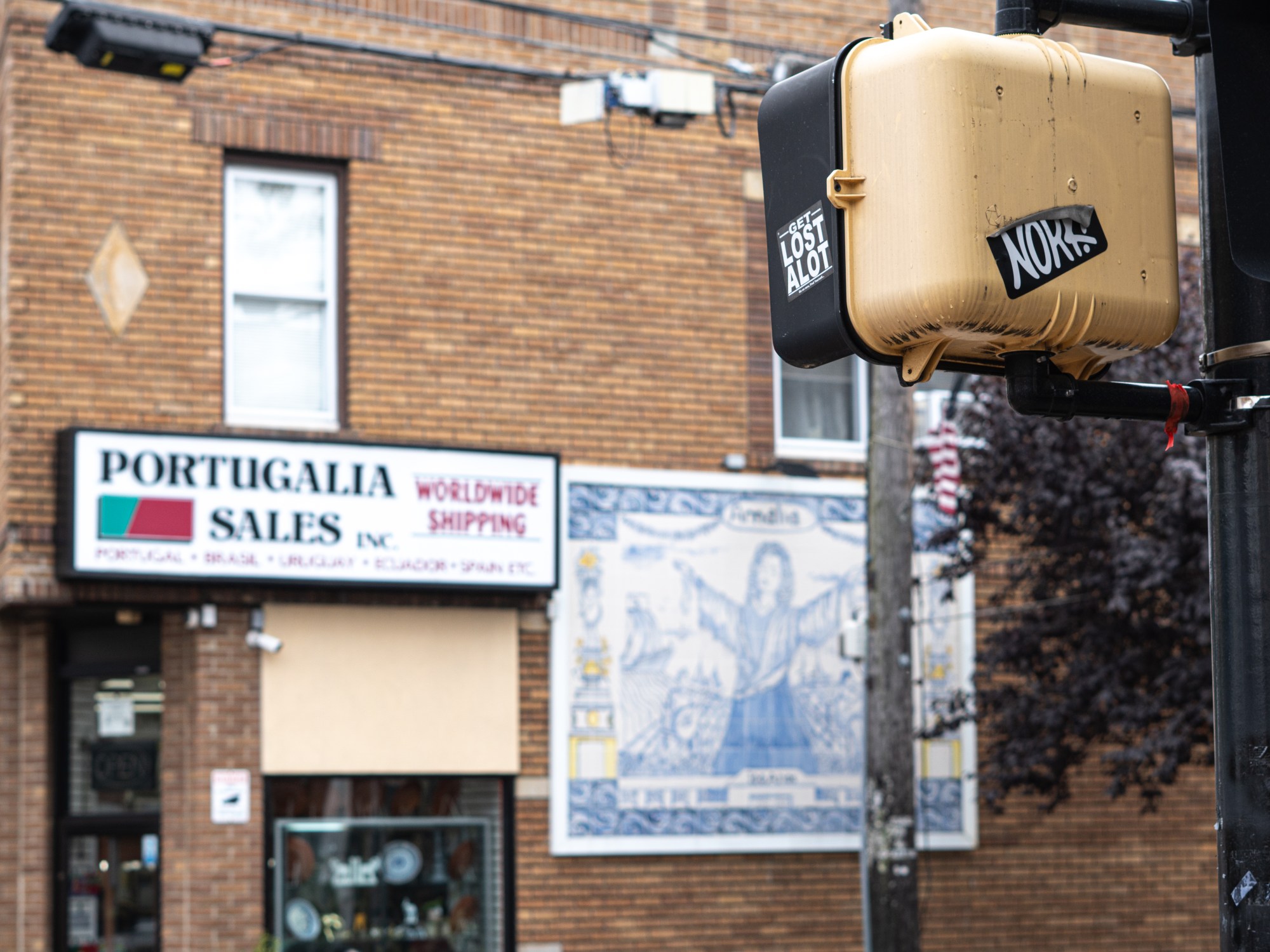
Featured image: Lawrence Krayn, Instagram: Xquisite_Grit
 The Newarker