
By Rachel Wagner
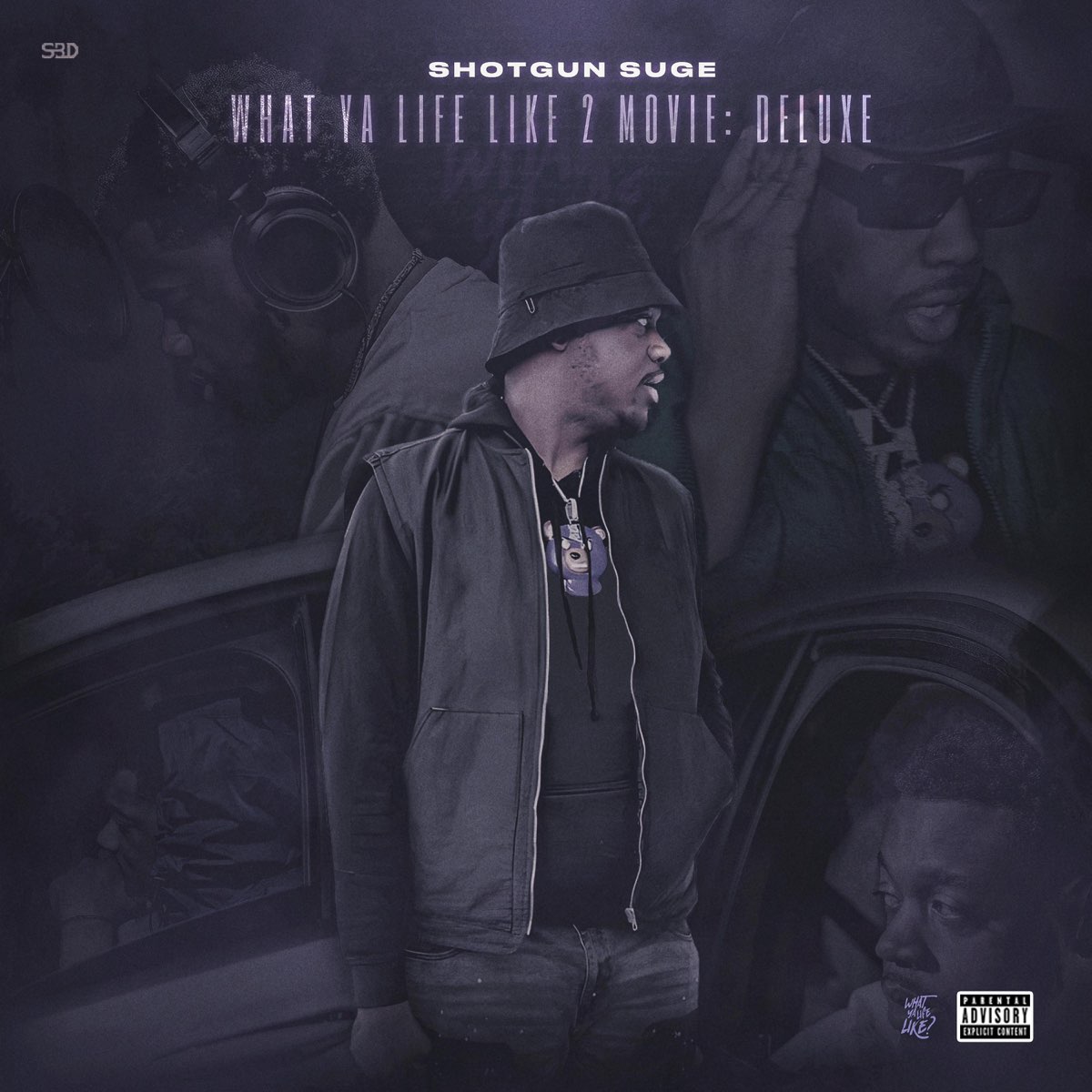
Sometimes rappers will put out a “first day out” song when they’re released from prison. Gucci Mane did it, Kodak Black, JT, a few of others. Those songs are hungry and hopeful and ready to go. Getting free means being able to get back to the music and the money and whatever else they’re doing—back to life. But in the movie What Ya Life Like? (2023), Shotgun Suge is a Newark rapper dealing with someone else’s first day out. The brother of a guy Suge killed over some money comes home ready for revenge.
Pop gets out of the Essex County Jail after seven years, gets a haircut, and gets some guns before he even changes out of his jail clothes. Meanwhile, Suge, who plays himself in the film, is living his regular life: cheating on his girlfriend, going to the studio, shopping for clothes. He seems to be doing alright for himself, but everything keeps getting interrupted by his problems with Pop. When first confronted, Suge warns him, “don’t get yourself hurt on your first day out.” From there, people keep getting killed or shot at. First a threat with a gun, then a couple shootings, then practicing shooting in the park, then another shooting, then another. Things just keep escalating back and forth.
It’s similar to Fyodor Dostoyevsky’s novel The Possessed, where this “completely strange young man” (171) named Peter returns home to a small town in Russia. Peter has a way with words. In his first appearance in the book, he’s already talking as he enters the room. No one even knows who he is at the moment, but his return ends up causing endless chaos and violence and death. Houses are burned down, friendships are destroyed, and people die, all because of his mind games with the locals. In that book, the narrator is a guy who is a part of the main friend group, watching everything go down. His view is very detailed oriented. He’s looking at body language and facial expressions and assessing people’s energy to tell the full scope of the story.
That’s something Suge reflects back at the end of the movie—“somebody is always watching.” What Ya Life Like? makes you the witness to the hovering threat of destruction. Between scenes, there are camera shots driving down Broad Street and Bergen Street or arial views of the city from above. But then when people are talking, the camera is right on them, zoomed in on their faces to hear every word they’re saying. You have no choice but to watch close.
The structure of the movie works almost like a visual album. Suge talked a little about that before the premier the other night at the CityPlex on Springfield Avenue. He said What Ya Life Like? started as a music video idea. Then he approached the director Denity with a script for an hour-long movie. Even knowing that, it was a little unexpected the first time his character breaks into song. He’s speaking to a friend on the steps on his way out the door to the studio and switches from talking to rapping. A few of his verses are inserted right into the story like that. Suge plays the hero when he comes to rescue his girlfriend from being shot at in her parking lot, rapping a verse on the way there. It seemed funny later when his girlfriend was beating another girl up and there he was, standing around rapping about some other stuff.
It made me kinda see how rhyming a poetic song or verse in a traditional music video is really a lot like a monologue in a play. The point of a monologue is to give more information and voice to the audience or another character, to make internal motivations clear. Here, the raps show who Suge really is behind the drama. His logic, his accomplishments, his worldview. In that way, What Ya Life Like? is maybe more comparable to a musical—a mix of songs and dialogue pushing the plot forward. That balance of music and life in the structure of the movie also aligns with the central issue Suge’s character faces: being a rapper who is making money off music, while also being a street dude who has to look over his shoulder every minute.
Mistakes are made, but you are sitting there still rooting for Suge. Then there’s a scene where he’s being interviewed and afterwards the interviewer finally tells him, you should really chill. You have something. You should act like it. It’s a warning that reminded me of the Young Thug situation. He’s someone who made it to real stardom and was still involved in the streets and is now facing a whole list of charges. But at the time, what he was talking about and maybe doing seemed regular. A person’s publicly perceived lifestyle relates back to the value of authenticity in rap—like yea but do you really live like that? That question comes in from different directions during this movie. Pop is claiming “that shit he’s rapping about—that’s my life,” and Suge is rapping “same way on these songs I am in person.” His persona seems to be a culmination of those perceptions.
Maybe the realest part of the whole thing was the feeling in the theater that night. Everyone in the audience seemed to know someone or everyone. People were so happy to be there. A woman yelled out “we’re proud of you, Suge!” when he was introducing the movie up front. It was a truly hyper-local event for the movie’s first day out.
Rachel Wagner is a writer from New Jersey, currently living in Newark with her son. Rachel also teaches at Seton Hall University and runs an online bookstore called Ten Dollar Books. More of her work can be found at Rachel-Wagner.com.
 The Newarker
One thought on “Doom Comes Swiftly: What Ya Life Like? (Movie Review)”
Comments are closed.