
By Linda Morgan
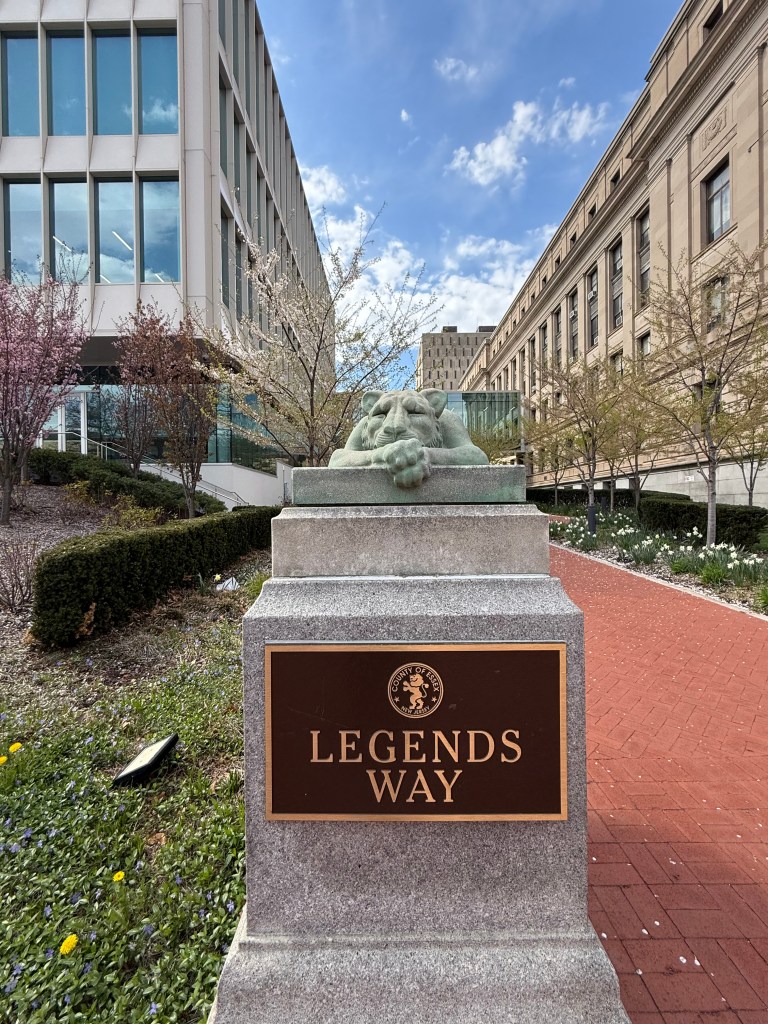
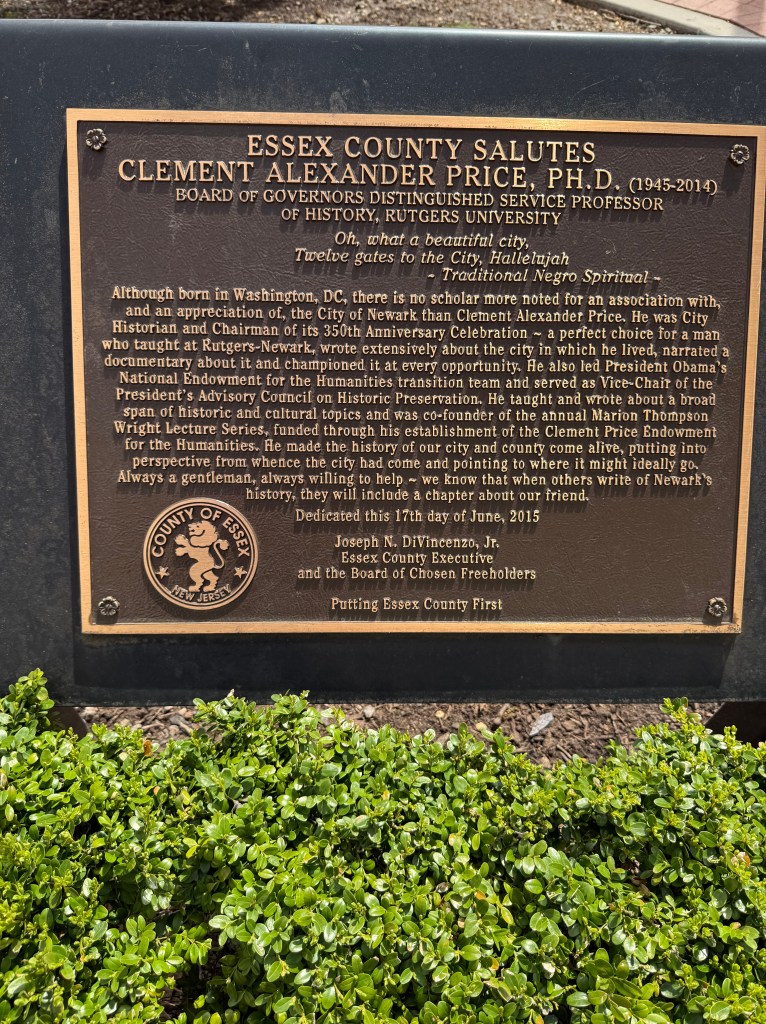
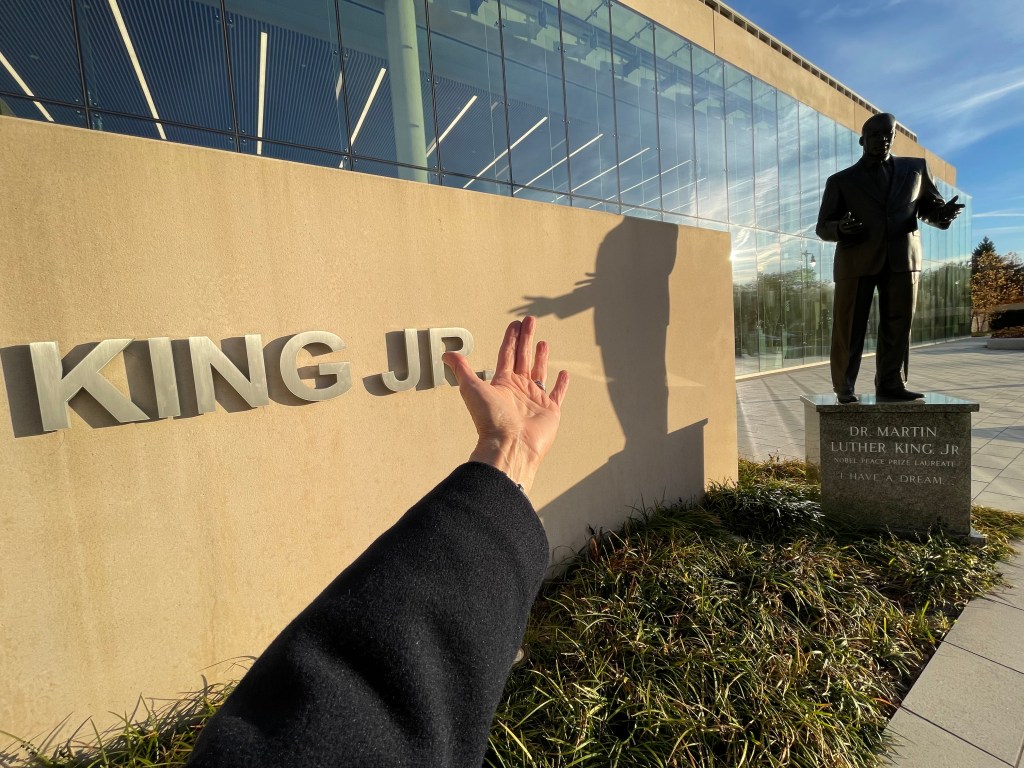
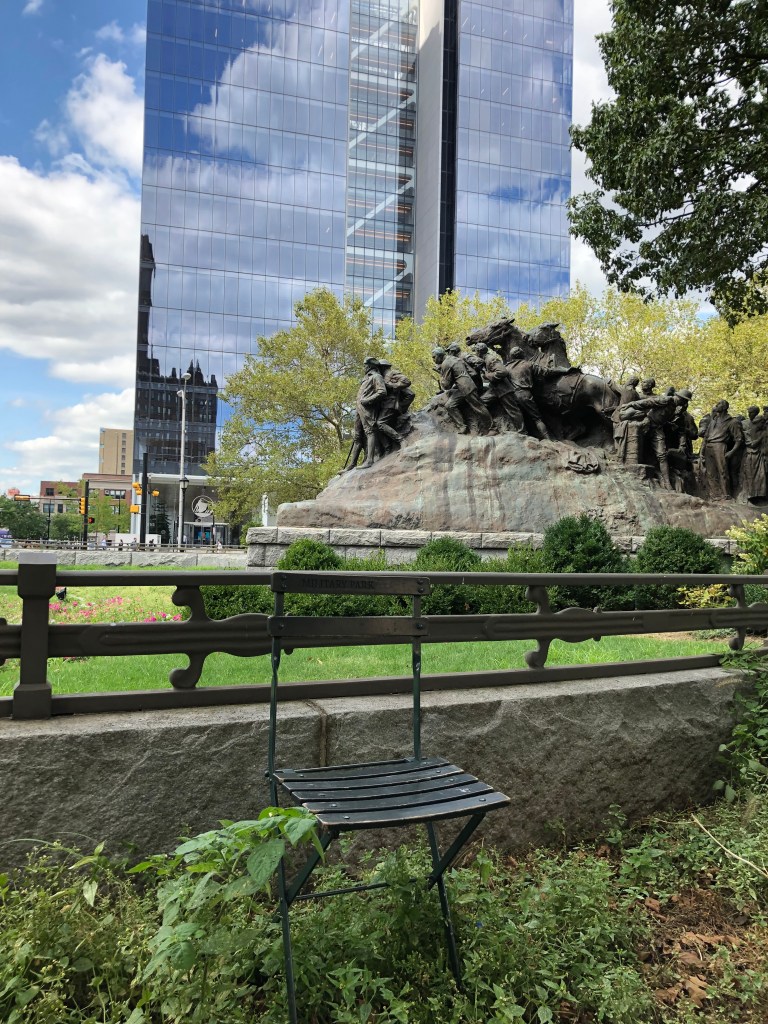
Newark’s downtown offers spaces to delight the senses and places to seek sanctuary from the bustle of its busy streets. Essex County Courthouse’s campus commemorates historic leaders while also offering space for rest and reflection. Enter the gates along MLK Boulevard between statues of the sleeping lion and jaguar to stroll past local heroes’ plaques on the Walk of Fame. Some favorites include Rutgers University History Professor and Newark and Essex County historian Clement Price, Major League Baseball Hall of Famers Larry Doby, Yogi Berra and Monte Irvin, and former WBGO jazz radio station director Cephas Bowles. Round the corner by the Justice Building to shake shadow hands with Martin Luther King as light spills across his statue on an autumn afternoon. Sit on a bench in Veterans Memorial Park and watch children dodge fountain spray in the late afternoon sun.
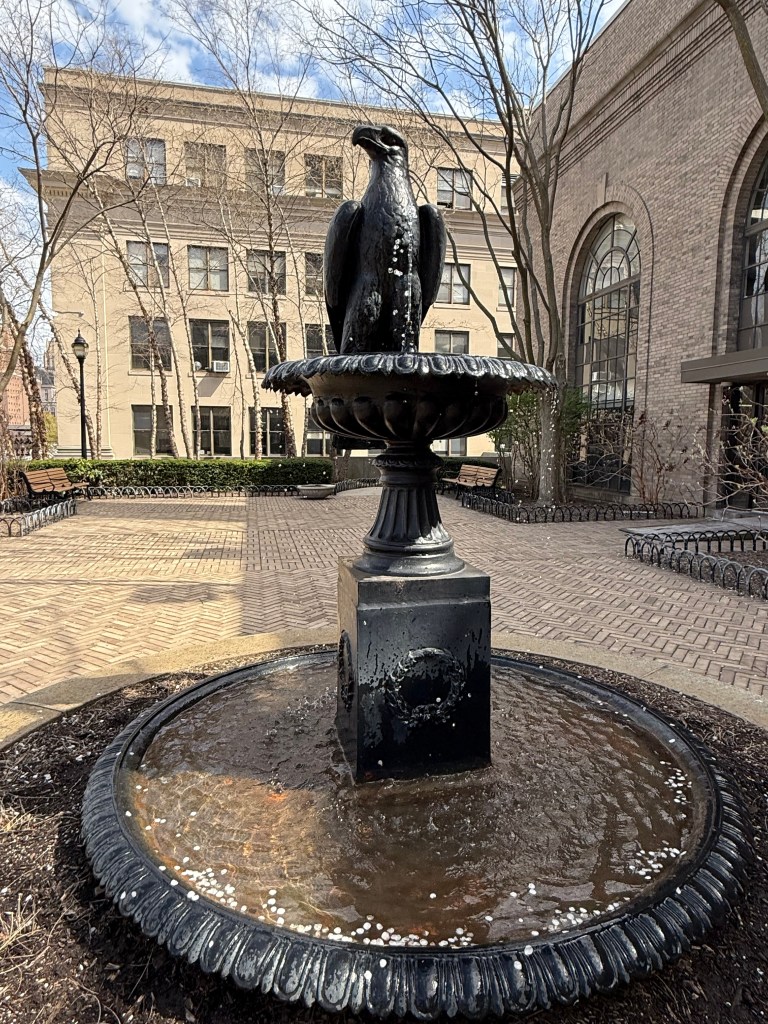
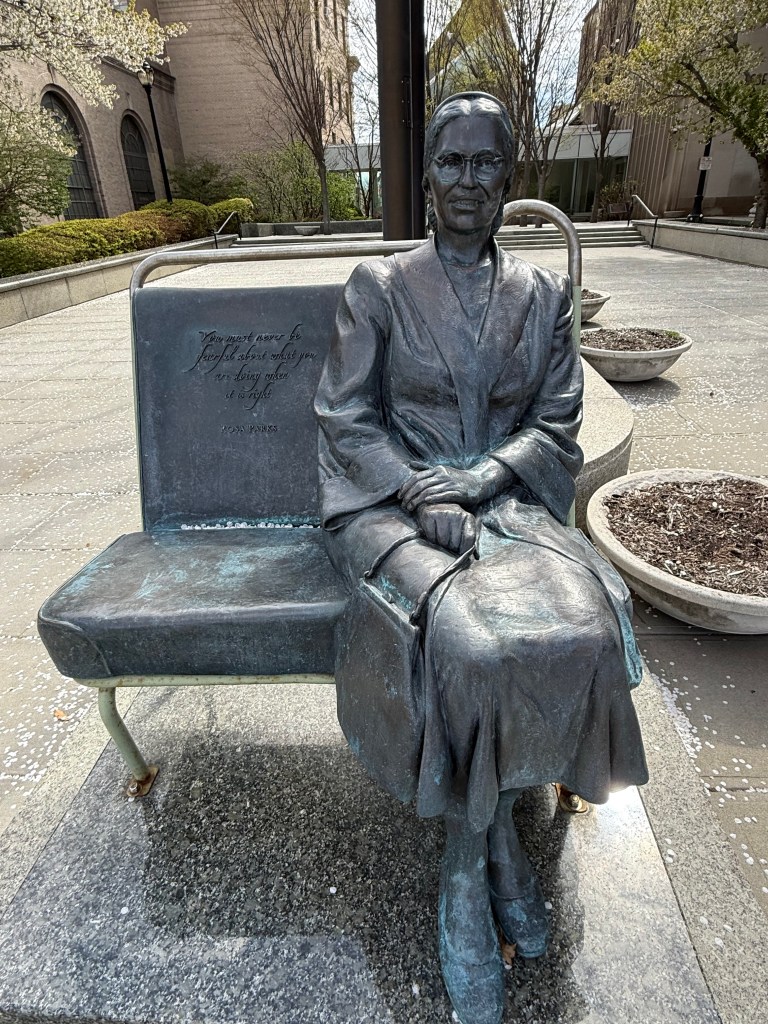
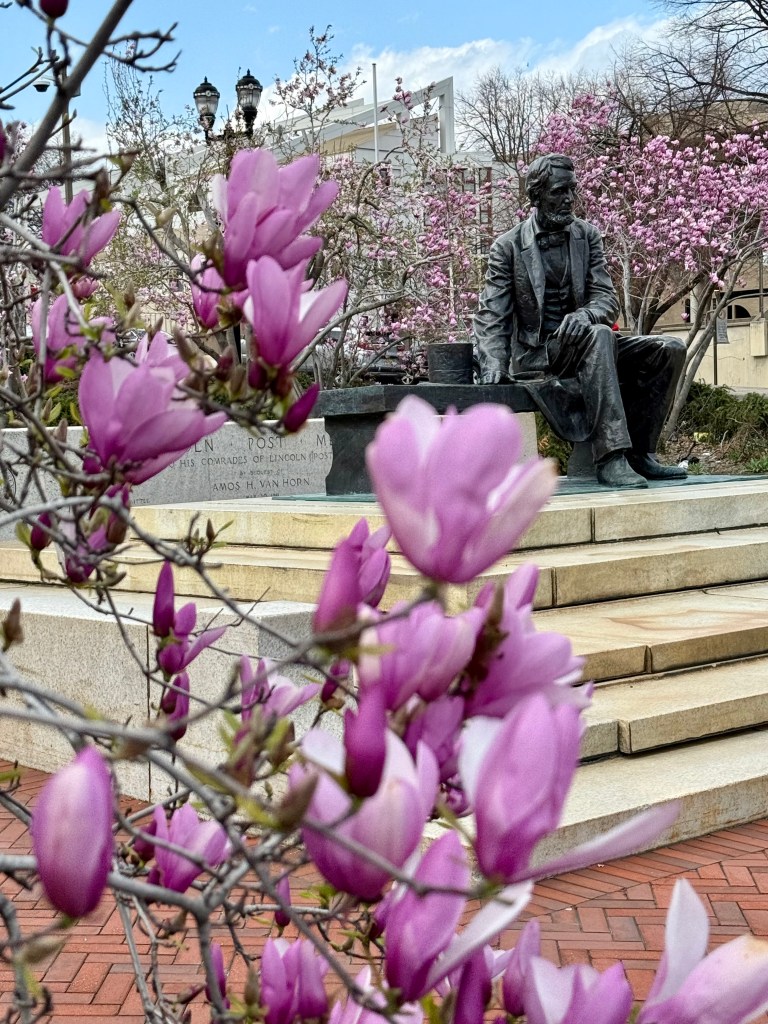
Just past the William J. Brennan Jr. Plaza, sit a spell with Rosa Parks on her bus seat, and step into the adjacent powerhouse terrace, a serene place to eat lunch by the burbling eagle fountain. Return to MLK Boulevard to perch next to Abraham Lincoln, Gutzon Borglum’s magnificent statue, placing a mittened palm atop his mighty hand. From this perch, marvel at magnolia blossoms unfurling fuzzy fingers against the wail of police and ambulances screaming down Market Street.
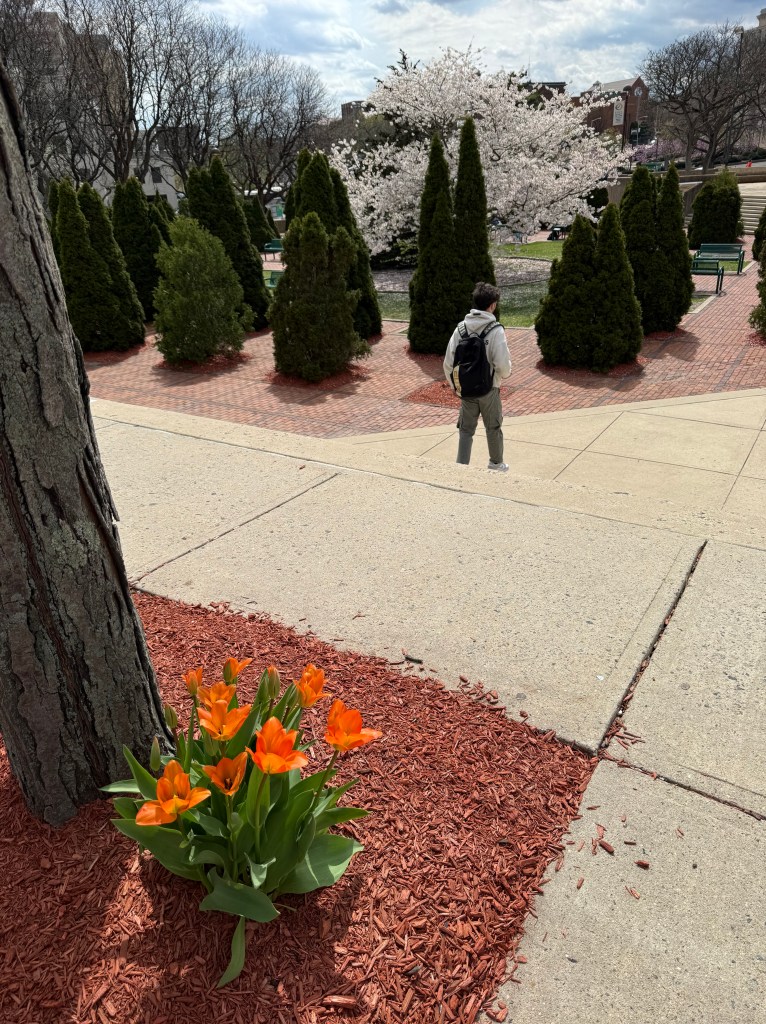
Downtown offers secret gardens and delights to discover as you walk about. Across the street from the Lincoln statue, on Essex County College’s Brutalist-style campus is an elevated grassy plaza with arborvitae trees affording privacy and green metal benches arranged in conversational clusters—a great place to have a snack or midday snooze. Play shadow puppets on the concrete walls as you jog up staircases across three campuses, stopping to observe historic icons of the city. From back parking lots on the NJIT campus, peer into the bed of former Morris Canal locks, now Raymond Boulevard, marveling at colorful murals spray-painted by The Rorshach Art Collective.
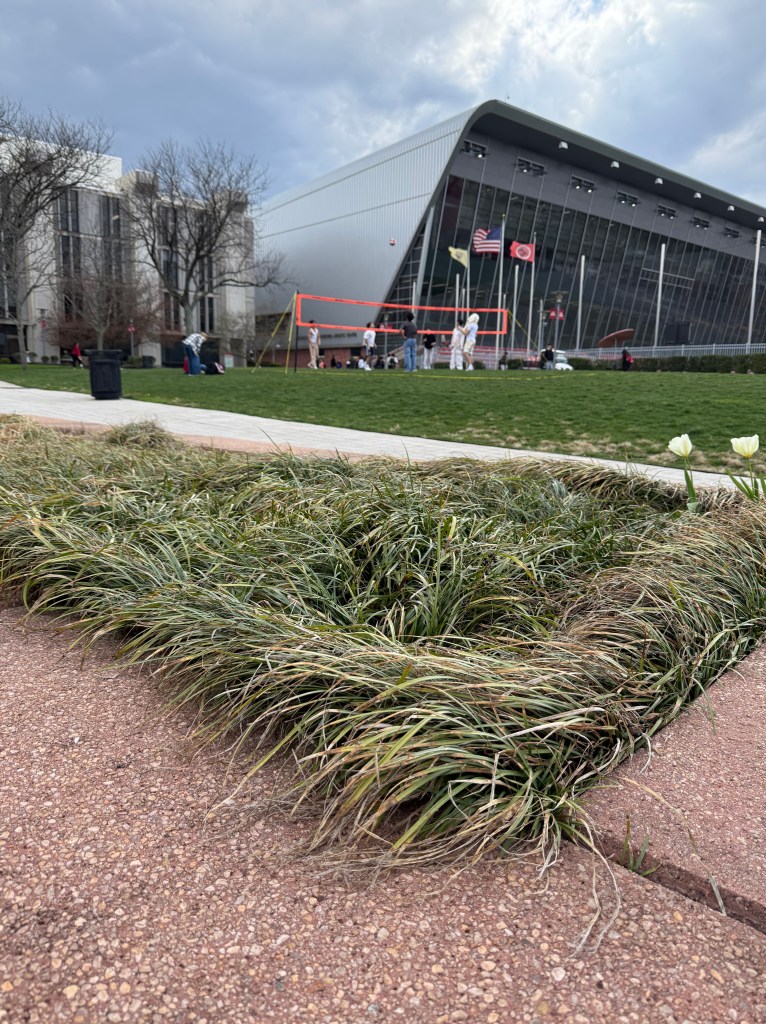
As you walk north on University Avenue look for beebalm threading along benches behind the Fire Museum on the Newark Museum of Art Campus. Visit the healing garden at the Price Institute and Rutgers’ native plant garden in the elevated plaza across from John Cotton Dana Library. In late summer, beach grasses undulate along NJIT’s campus green, conjuring memories of summer vacations far away.
Across from Military Park on Broad Street/Mayor Kenneth A. Gibson Boulevard, gaze at the towering green wall of Prudential’s headquarters plaza, then lie supine on the lawn in the park to spot contrails and clouds reflecting off mirrored facades of Prudential’s and PSEG’s glass buildings. Listen to stories about Harriet Tubman as narrated by Queen Latifah at Nina Cooke John’s Harriet Tubman monument in the Square. The park will soon be renovated to provide more benches and locations for families and visitors to enjoy this space that the City’s Puritan founders called Newark’s commons.
Views from downtown vantage points recall bygones; arts, stores and the gatherings of the past. Across from Essex County College, Neptune’s bar (formerly Suite 304, and prior to that, Skipper’s Plane Street Pub) at the corner of University and Campbell Street hosted college teachers and artists from Newark Print Shop, sharing rounds of drinks and admiring hand-made tote bags, greeting cards, and tee-shirts emblazoned with logos crafted at upstairs workshops.
Late nights spent at Gallery Aferro just around the corner on Market Street spilled a happy mix of artists, collectors and neighbors onto wide sidewalks. Shuttered storefronts presented no threat to patrons who moved easily from art auctions to dance parties at Index Art gallery just around the block on Washington Street. Never mind the cheap Pabst Blue Ribbon beers served at openings; there was, and still is, great conversation and camaraderie to be enjoyed amidst Newark’s art scene.
Mildewed former furniture stores along Market Street continue to insist “Everything Must Go,” and yet people still flock to this corridor for sales and transit access. Newark vo-tech students form a wave of navy-clad consumers cascading down sidewalks to catch city buses at the historic Four Corners of Broad and Market. One hundred years ago this crossroads was the busiest intersection in the United States. Now that Dollar General, Rite Aid, Old Navy, and other major stores have closed, after-school snacks are best purchased from loco coco shaved-ice carts or from hustlers hawking halal beef skewers from sidewalk kiosks.
When a few years ago an errant bus downed the last remaining tree on the block before smashing into buildings at the corner of Market and Washington Streets, urban planners urged the City to replace the foliage: “There’s so little green downtown!” Despite the outcry, several tree pits still stand empty, shorn trunks rising menacingly from iron grates.
Amidst a call for traffic calming solutions at key downtown intersections, pedestrians skitter hurriedly across Market and Washington Street, taking chances that cars, as well as carefree bikers and scooters traversing the sidewalks, will spare them injury as they hurry towards home. This corner of downtown needs a makeover as the immediate area’s buildings stand broken, empty and unclad, with an empty hole in the ground, tattered facades, and a glass micro-unit skyscraper struggling towards completion.
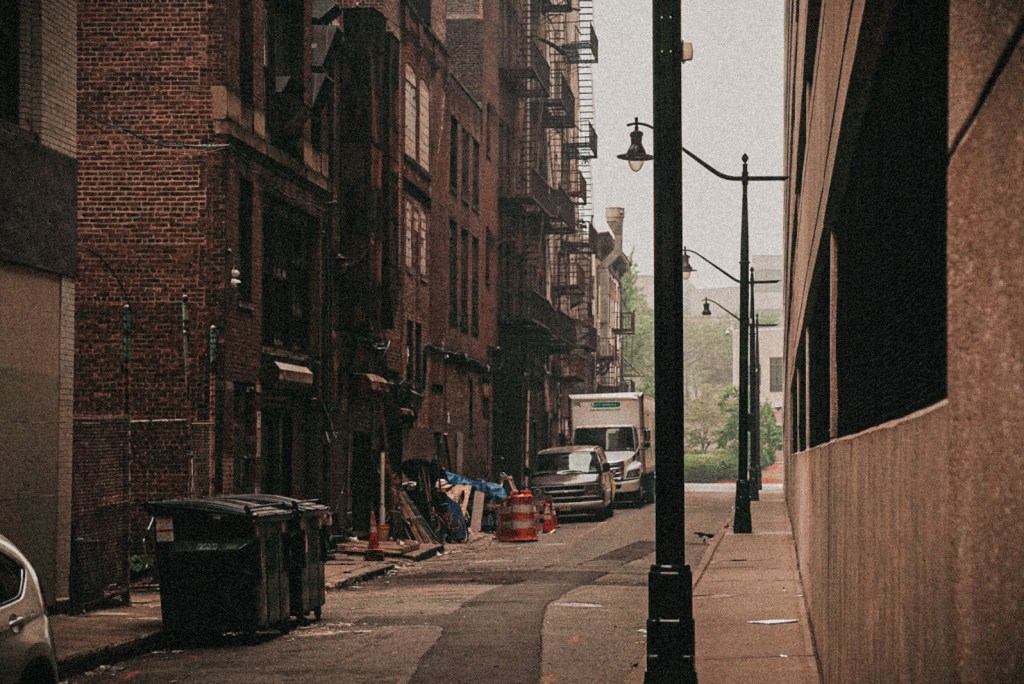
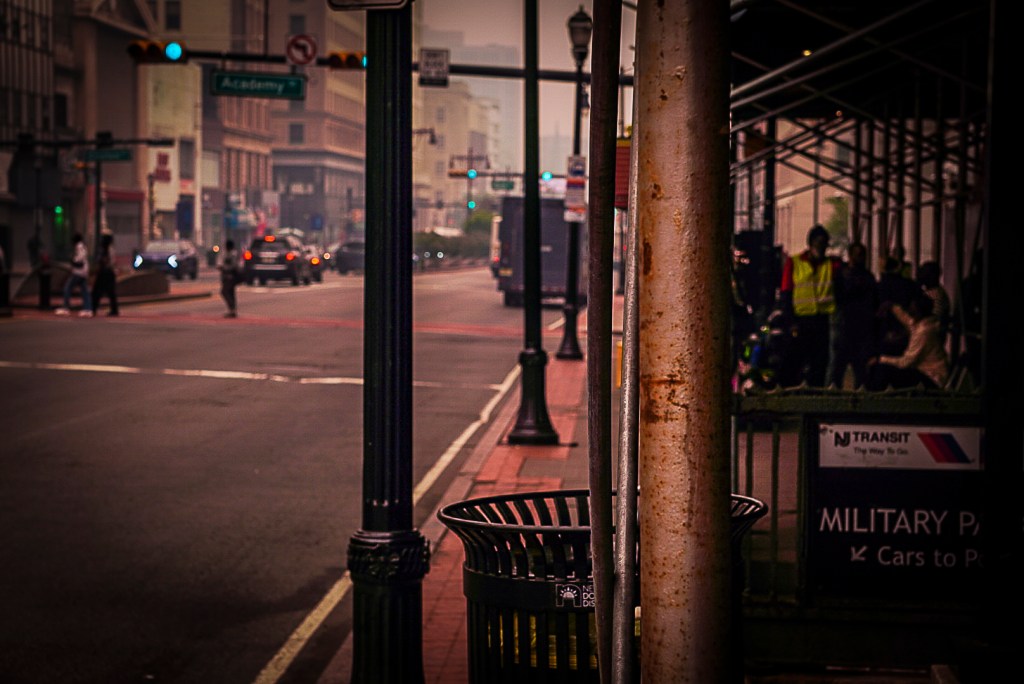
Walking the crumbled sidewalks from parking lot to office, workers must pass an unhoused man, his soiled blankets and discarded sandwich wrappers sticking to the circle of urine that surrounds his sidewalk stakeout. Some days he rants at the sun or at construction workers hoisting window-glass, steel and bricks up floor by floor as the micro-unit tower rises on Washington Street. Union organizers bring bullhorns and an inflatable rat and shout at the stream of rush hour commuters: “Honk if you support Labor, stop union-busting in Newark!”
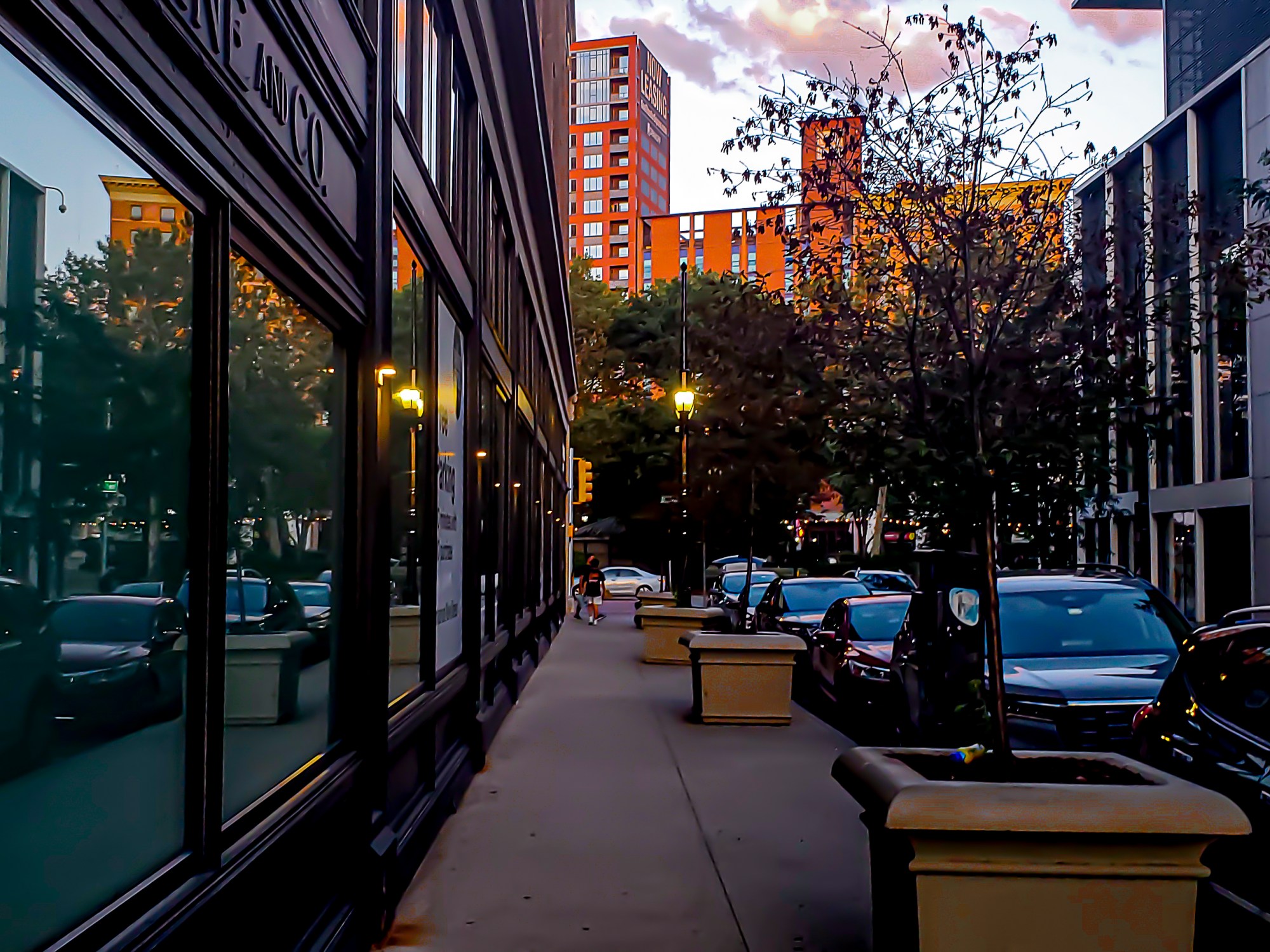
Fortunately, Halsey Street’s SoHo vibe presents welcome respite to pedestrians in search of coffee, lunch or a bit of retail therapy. Old faithfuls like Newark Fabrics (a swatch of silk to sew into a celebratory shawl), Black Swan coffee (for a heart-swirl atop cappuccino), or Green Chickpea (for Kosher falafel and tabbouleh), provide convivial rest stops along the way. Multiple havens have closed shop over the years, leaving gaps in the hearts and memories of Newarkers—losses like Newark Art Supply, started in the early 2000s by two NJIT architecture school graduates, which then became Art Kitchen; 27 Mix, with its excellent drinks, food and backyard entertainment; Elbow Room; Bubbleology; and beloved BurgerWalla, which for years churned out amazing burgers, sauces and desserts. Even Marcus Samuelsson’s restaurants in the Hahne building have closed in recent months.
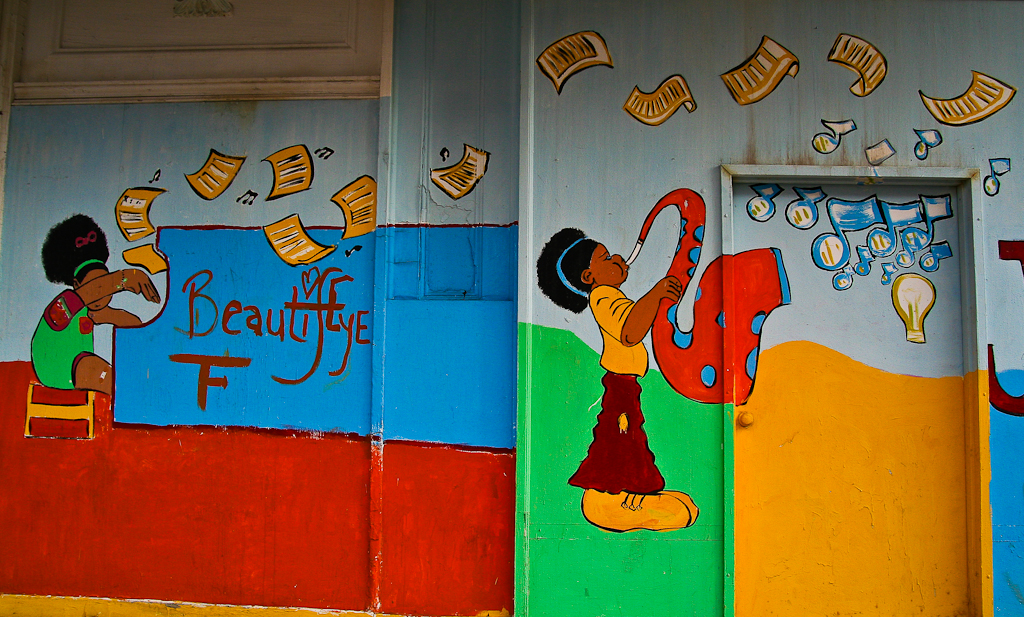
As before, Newarkers hope Halsey Street will continue to thrive as a retail and restaurant destination. Over 30 years, success grew organically. In the early 1990s local retailers and civic boosters organized Halsey Street Fests on a slim budget, filling two stages with rotating bands as well as Edison’s parking lots with food and craft vendors selling their wares. Throughout the 2000s in support of Newark Arts’ Open Doors Festival, volunteers scouted vacant commercial spaces in which exhibitors could showcase their works. Corporations organized downtown running races and the special improvement district created a labyrinth of mini-golf challenges on empty office floors. In 2006, volunteers painted a mural on the boarded-up Hahne building featuring Newark musicians, artists, office towers and flowers, and organized a sculpture garden in the empty pit below where Marcus B&P once stood.
If one sometimes feels regretful that things started years back have not endured, he/she can take heart in the knowledge that the initiatives that have continued to live on are ones to be proud of. It’s one thing to have a creative idea, and quite another to bring it to fruition; to make it last. Certainly one cannot do it alone. It takes vision, a leader(s) and an army of supporters to launch and sustain a good project.
Newark deserves to be celebrated for the folks who keep the dream alive, who hustle to raise money to keep their enterprises going, categorizing political or financial obstacles as opportunities—just another hurdle to work around, rather than giving in or giving up.
One can look for inspiration to the energy of some of Newark’s current ambassadors who continue to promote downtown. Newark is blessed to have leadership of the City’s Director of Arts and Cultural Affairs and the Arts and Education District and so many more dedicated and passionate individuals who advocate for the vibrancy of Newark as a cultural and entertainment destination. The commitment of these musicians, performers, artists and young professionals continues to nurture Newark’s downtown and its creative class, bringing us all together in challenging times.
Linda Morgan is an urban planner who has contributed to Newark and New York City’s economic development over the course of her career, creating the Newark Downtown District, working in brownfields development, the arts, and social impact real estate development. She founded the Montclair chapter of Women Who Write, and her stories and poems have been published in Goldfinch and other NJ publications. For the Newarker, Linda profiles the people, places and institutions that continue to make the city a dynamic destination for food, culture and economic growth.
Images: First nine by Linda Morgan; Next three by Lawrence Krayn; Mural by Alan Houston; Featured Image: Lawrence Krayn – @Xquisite_Grit
 The Newarker