
By Keenan “Rev” Jasper
I didn’t have a COVID experience like most people. I caught it early—like a Jordan drop.
March 14, 2020. St. Patty’s Day weekend. I’d come home from a day of bar-hopping, just tipsy enough to feel the edges blur a bit, and noticed I was short of breath just walking up the backstairs. Not winded, just . . . off. I brushed it off as a mix of bad Jameson, Guinness, and worse allergies. But the whispers were already circulating—about this strange new virus, about towns locking down, about the hospitals filling up. Something was coming.
A few days earlier, I’d sat through a job interview at a company that was already taking the thing seriously. Temperature checks, sanitizer on every surface. It felt like the future. I remember thinking, Damn, these people are thorough. This might be it—this might actually be a career. But that’s another story.
What happened next for us, is that the world never slowed down, it just stopped. I got sick. And that day—March 14, 2020—was the last day that felt remotely normal. For me, for millions, for the world. Following that was a blur: sickness, silence, sirens, shutdowns. I remember I couldn’t breathe. Literally. While people were learning how to bake banana bread and binging Netflix shows, I was in bed fighting for my life. I wasn’t discovering new hobbies. I wasn’t organizing my closet or doing home workouts. I wasn’t spending $1,200 checks or whatever they were on Don Julio 1942. I didn’t care about what shows dropped or what Zoom hangouts I was missing. I was too busy just trying to survive. Now, over 7+ million dead later, we are stuck with whatever this is.
The truth is, I didn’t know if I’d make it through COVID. Not in the vague, existential way people talk about pandemic fatigue or “the new normal.” I mean there was a stretch of time, where my body wrecked and my nights long that I just didn’t know. And somewhere in the haze of fever and fear, I realized something terrifying; I might never go to see a movie in the theater again.
That thought hit me harder than I’d expected. Not because movies were gone—but because I may have been. The version of myself that found comfort in darkness, in projection, was suspended, perhaps forever.
In those dark days—fevered, disoriented, unsure if I was going to wake up better or worse—I kept thinking about the life that existed before. The sounds, the rhythms, the rituals. And one of my favorite pastimes—the one that felt farthest away—going to the movie theater. Not just watching a film, but going. Sitting in that sacred space, lights down, sound up. When I finally got better—weeks later, rattled in ways I still haven’t recovered from (#longcovid), the first thing I wanted wasn’t a dinner out. It wasn’t to see friends.
I wanted to sit in a theater again.
Eventually—slowly, awkwardly, with hand sanitizer in our pockets and uncertainty in our chests—they let us come back. I remember the first time I stepped back into an AMC. It felt like a post-apocalyptic ritual. Every other row was blocked off with yellow caution tape, like a crime scene. You had to pick your seat on the app and pray no one sat too close, even though the next closest person was already two seats and one row away.
Mask on the whole time. No soda refills. Popcorn pre-bagged. Ushers who looked like CDC interns. I wasn’t scared in any way whatsoever. I was ready to risk it.
The movie that was supposed to bring theaters back? Tenet. Christopher Nolan’s overly complicated, overly serious sci-fi Rubik’s Cube. That was the event. The one that was going to resurrect cinema. It was absolutely horrible.
I wanted to love it. I wanted it to mean something. But halfway through, I realized I had no idea what was happening—and worse, I didn’t care. The sound mix was a mess. The dialogue was swallowed by crashing waves and synths. Characters delivered monologues like they were reading quantum physics after sipping lean. In the quiet of that half-empty theater, I looked around and saw the same face on everyone: confusion mixed with disappointment. This was supposed to save us? This was supposed to save the theaters?
But even with all that—despite the masks and the muffled sound and the film itself—I remember walking out and feeling alive. I was in a theater again. I had returned to the place that shaped so much of my imagination, my joy, my identity. From that point forward, I haven’t stopped going.
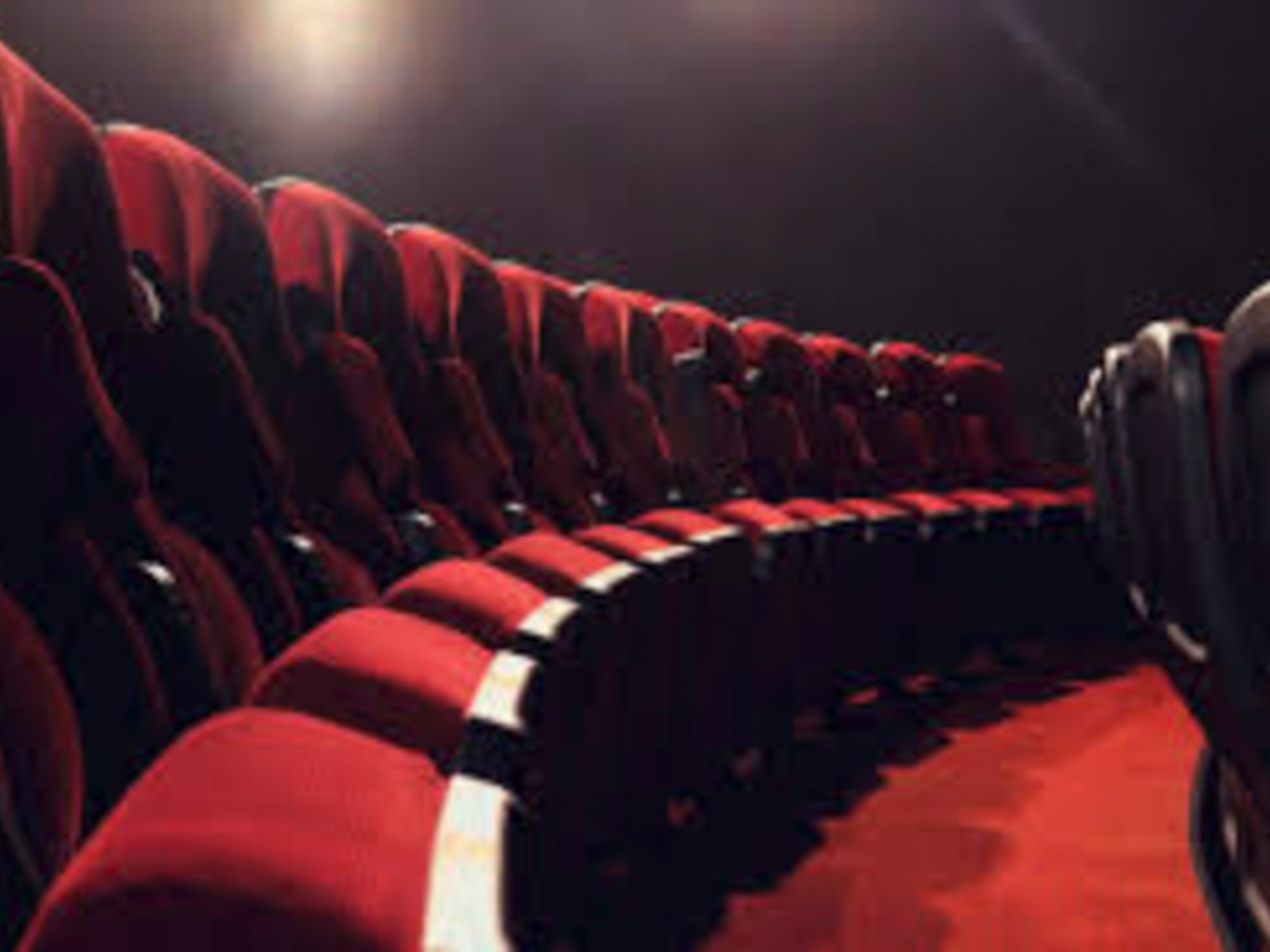
Let’s get one thing straight: watching a movie at home—no matter how big your screen is or how many Atmos speakers you’ve nailed into your ceiling—will never match the experience of sitting in a dark, oversized room full of strangers, each of you surrendering to a story larger than yourselves. That’s not me being sentimental. That’s fact.
It’s 2025, and we’ve got more content than we know what to do with. Streaming platforms are breeding grounds for prestige projects and mindless bullshit alike. But despite the tsunami of choice, I still find myself—religiously—inside a movie theater at least three times a week. Ever since they flung those doors back open after lockdown, I’ve been there. Because the theater isn’t just a place—it’s a ritual. It’s where cinema breathes.
I saw Se7en again on the big screen in IMAX just a couple months ago, projected in all its oppressive, rain-slicked glory. I’ve seen that film over a dozen times at home, but nothing prepared me for how alive it felt in that dark auditorium. Every crack of thunder felt like it might split the screen. Pitt’s unraveling paranoia, Freeman’s world-weary monologues—they hit differently when you can’t pause and doom-scroll Instagram. When you’re held captive by the narrative.
Same thing happened when Rear Window made the revival rounds. Somehow, that claustrophobic masterpiece expands in a theater. Hitchcock’s voyeuristic tension isn’t just a gimmick—it becomes an impulse for you to watch. I caught a young couple behind me arguing over what Grace Kelly’s character represented midway through the movie. You don’t get that kind of dialogue when you’re curled up on the couch half-watching and looking at Kanye’s tweets.
And then came The Brutalist—the one that shook the ground in a different way.
Shot in VistaVision, The Brutalist was a deliberate throwback: large compositions, extended takes, and get this—an actual intermission. When that “wallpaper” on his family appeared on screen, I thought something happened. I was ready to go to customer service and say the film is broken and try to get a free ticket. Then I saw that countdown, signaling the break, the entire room exhaled. Not in annoyance, but in reverence. It was as if the film was giving us a moment to feel. Like the epics of old, it demanded patience and attention, and it paid off in dividends. The raw scope of its visuals, those concrete landscapes, would’ve flattened on a flat screen. But in the theater? They roared.
That’s what keeps me coming back. That raw, unfiltered connection with the image. At home, a film can be good. But in a theater? A film becomes real. The laughs hit harder. The silence feels heavier. The horror creeps deeper. It’s not nostalgia—it’s physics, it’s emotion.
We’ve turned movies into background noise. But theaters force you to listen. To feel. To be present. Streaming has its place. I get it. Convenience, control, comfort. But cinema was never meant to be comfortable. It was meant to move you. To overwhelm you. To shake you.To leave your jaw on the floor as the credits roll the lights don’t come up fast enough.
That’s why I still show up. Week after week. Phone on airplane mode. Shout out to airplane mode. Eyes forward. Because there’s no substitute for the real thing.
And there never will be.
Rev is a film and culture writer for the Newarker. He watches movies so you don’t have to (but you probably should). Good cinema makes life feel less ridiculous. Either way, he’s too deep to stop now. To him, movies and music tell people who they are—or at least, who they pretend to be. Hit his Substack for film reviews, music, and culture: Kelevra Cinema
 The Newarker