

By Linda P. Morgan
April, 2026
The Port of Newark and Elizabeth remains a mystery to many people. Driving the Newark Bay
Extension to Bayonne and Jersey City, you will see a checkerboard of new automobiles parked below, recently unloaded from container ships. A tidal wave of trucks hauling port containers threatens to edge cars off the road. Once past these sights, they are soon forgotten. Behind these scenes is a whole world of industry, a hub of global trade that arrives by sea, delivering 90 percent of all automobiles that annually reach the Northeast, and 80 percent of all containerized cargo we consume. The BMWs and Toyotas we covet at dealerships, bananas and orange juice we eat for breakfast, new sofas, smartphones, and the clothes we order online, all come into the port by ship.
Thirty years ago, before there was even an exit 13A off the Turnpike, providing access to the Jersey Gardens mall, with its movie theaters and bowling by the bay, the Port was fully sequestered from Newark and Elizabeth. Man-made barriers included the Turnpike, IKEA, and a 200-acre municipal landfill bisected by a great ditch that drained stormwater runoff from the City of Elizabeth into Newark Bay. Undaunted by the prospect of piping the ditch and paving it over for commercial purposes, in the mid 1990s a Danish company hired an urban planner from Newark to staff a trailer on site and navigate the permitting process to transform acres of oozing garbage into a shopping mall.
In those days there were scant choices for lunch venues among the swirling dust and noise of barreling trucks and aircraft landing every two minutes at Newark Liberty International Airport. Options included a food truck parked by the entry to the dump or Ikea’s Swedish meatballs on a porcelain plate. According to the food truck vendor, ‘somewhere in the port’ there was a sanctuary for seafarers, serving a hot buffet available to mariners and port workers. This refuge turned out to be the International Seafarer’s Center (ISC), the only publicly accessible facility in the 272-acre Port Newark Container Terminal.
What started as a quest for food, a quick workout, shower, and some much needed peace and quiet, became a source of knowledge of the human side of port commerce. While today the ISC no longer serves a lunchtime buffet for port workers, staff at the Seamen’s Church Institute (SCI) at the ISC continue to minister to the economic, safety, and spiritual needs of the over 1.5 million seafarers who crew the thousands of vessels that come into the Port of Newark each year. SCI serves as the soul of the port, and it’s well worth a visit to ISC to learn more about port commerce and the men and women who bring us the goods we consume.
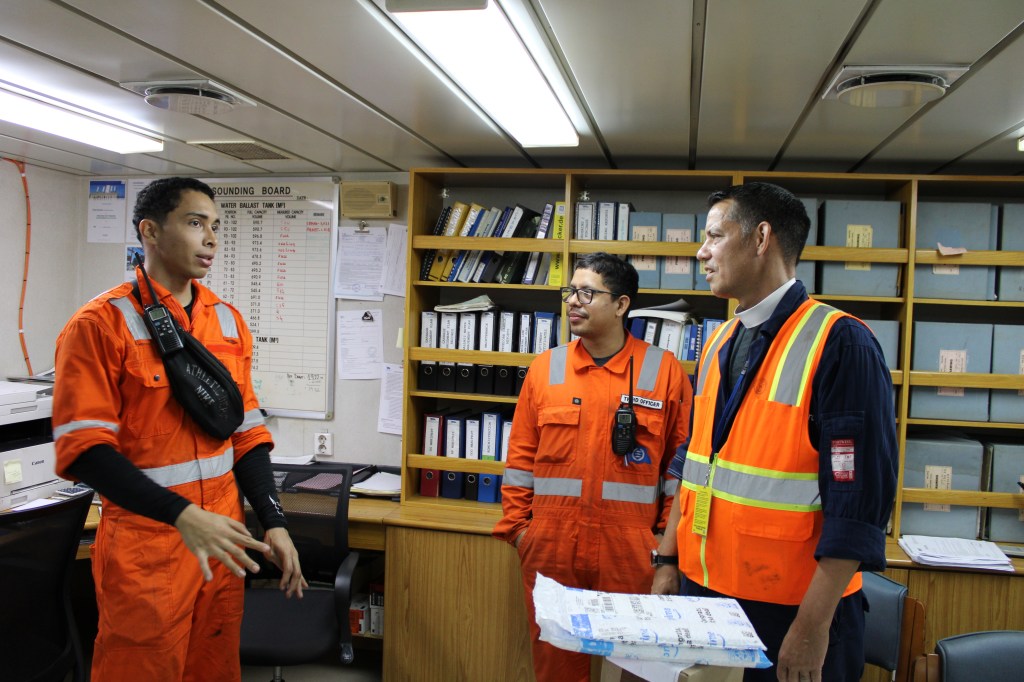
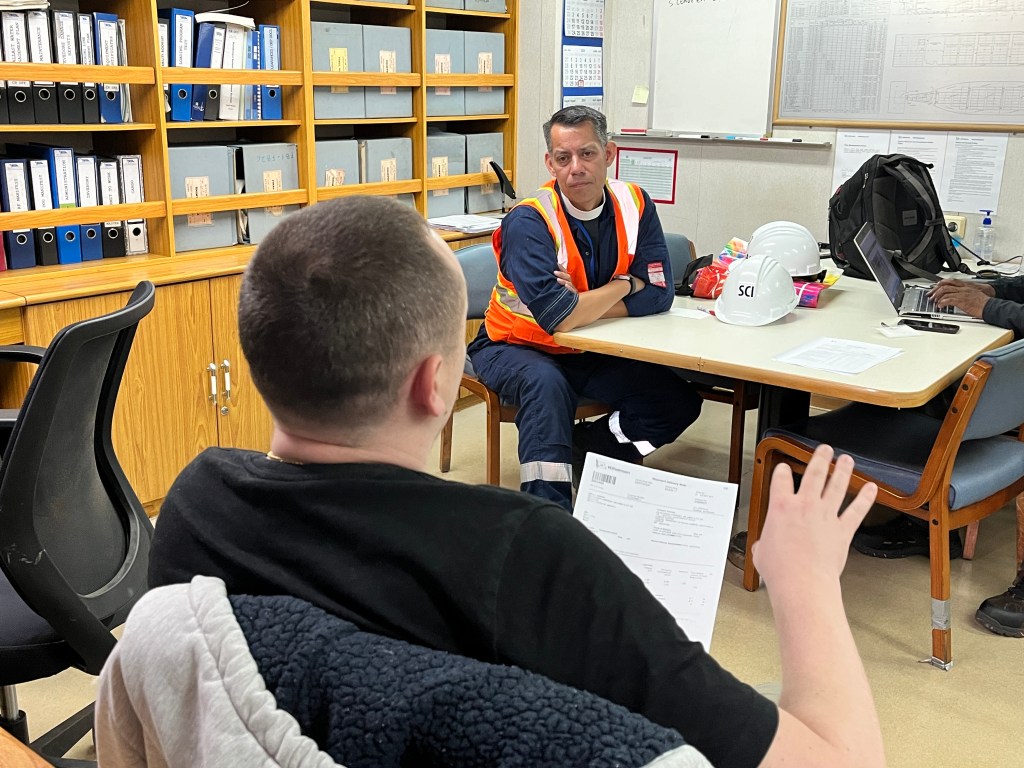
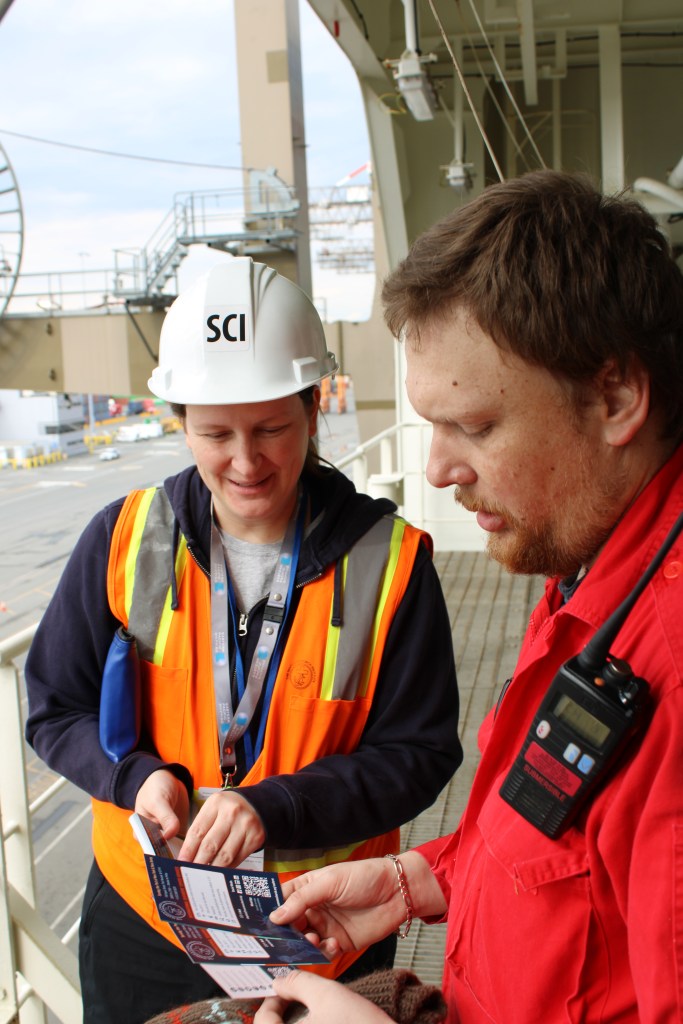
First and second photo courtesy of Seamen’s Church Institute, third photo by David Rider
Founded in 1834, the SCI’s church services were originally held on a floating barge docked at the foot of Pike Street on the East River in Manhattan, with a second floating church situated at the foot of Dey Street on the Hudson River. The churches provided refuge to seafarers and many first generation and immigrant families enmeshed in the rough-and-tumble environment of the harbor’s shipping industry. Over the centuries, the Society’s mission has prevailed such that SCI currently operates in Manhattan, Houston, Paducah, Kentucky, as well as at Port Newark.
SCI’s ISC facility began operations in the Port of Newark in 1961. It occupies a modern, sun-filled building that includes a chapel, fitness center, lounge with Wi-Fi and internet access, game room, and basketball court. Chaplains as well as social workers are on hand to offer spiritual and emotional support, as well as safety and training courses. The Center also offers banking services, legal, and economic assistance to mariners and Port workers. Visitors are welcomed with warm hospitality by Office Manager Janet Temchus and ISC Director Matthew Morse, Esq. Director Morse has for the past two years managed operations at the ISC, while also managing organizational infrastructure in close coordination with SCI’s Director of Operations, Leslie O’Neal.
Upon learning that his visitor used to come to the Center to escape the smells and grime of landfill excavation in the port, Director Morse kindly invited his guest to come back two weeks later to experience a holiday celebration for port workers and seafarers. That day, he greets members of the Port Authority, truckers, cement workers, and visitors by handing out lyrics to Christmas carols and inviting all to partake in a chapel service followed by a holiday buffet. It felt wonderful to be back.
Morse explained that while SCI maintains proud and lasting roots in the Episcopal Church, its services are intended for, and provided to, all who need them regardless of a person’s faith background or lack thereof. “It is not our job to tell you what to believe, Morse noted, “It is our job to take what we believe and use it to help you.”
Throughout decades of changes in port commerce, the Port of New York and New Jersey has maintained its status as the second largest port in the United States and the largest port on the East Coast, handling approximately 5 million containers; 3.1 metric tons of bulk cargo delivered within the sprawling port complex that occupies over 3,000 contiguous acres in New York and New Jersey. This cargo is valued at almost $240 billion per year, capturing over 13 percent of the total U.S. container market share, and approximately 32% of the total East Coast market.
Container ships move slowly compared to rail, truck, or air transport, but they are a cheaper means of moving vast quantities of cargo around the globe. Traversing designated routes, container ships travel 21, 30, 60, or 90 days per voyage, arriving at the Port of Newark after being piloted through the Narrows or the Kill Van Kull and then through Newark Bay. Captains who are licensed pilots familiar with the landmarks and configuration of the port’s specialized cargo channels will board incoming vessels to steer them to shore. It can sometimes take as long as 12 hours for a pilot, tug, and crew members to navigate the passage between ocean and dock, depending on availability of pilots, the tides, wind, and port logistics.
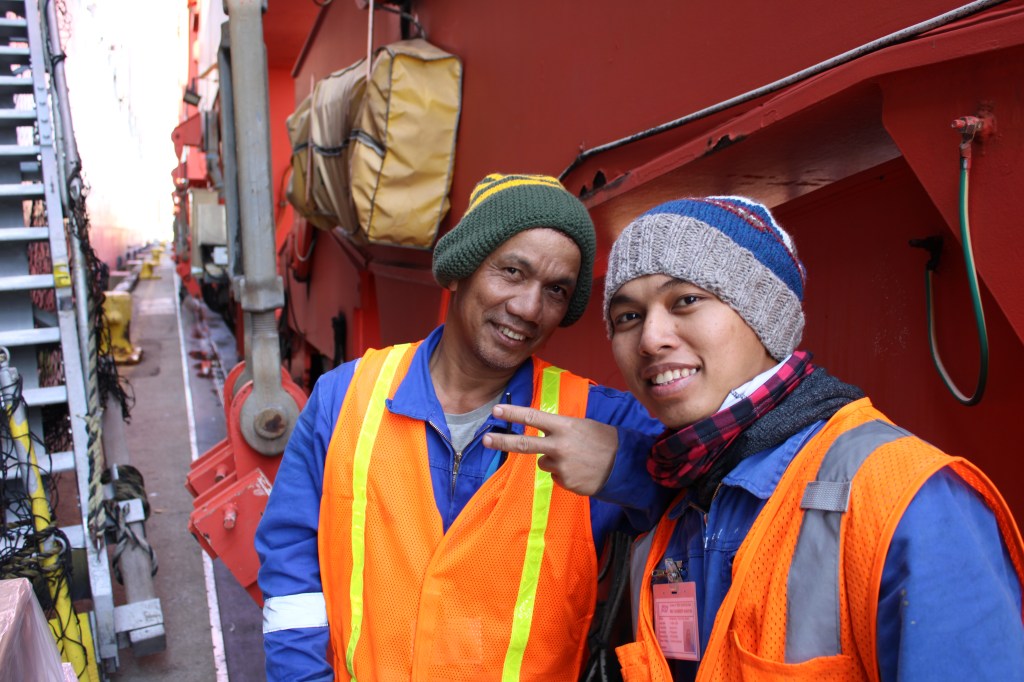
Today, over 500,000 people work in the Port of NY and NJ. These include truckers, warehouse workers, fuel and cooking oil processors, shipping company workers, cement loaders. Onshore workers operate under different rules and regulations than those aboard ships. The over 1.5 million seafarers who crew the thousands of vessels that come to shore each year hail from all over the world, with the Philippines emerging as the leading supplier globally of sea-based workers. On international vessels, approximately one in every five crew members is Filipino.
Non-ranked seafarers generally travel under a 9-month contract, with officers and engineers serving 6 months at sea. Upon docking at port, depending on visa status and what is happening internally in the ship’s country of origin, crew may or may not be allowed to exit the ship for shore leave. If, for example, there is a terror threat from the ship’s country of origin, every seafarer on the ship is not allowed off that ship. If the ship is in dry dock 7 for an extended period and the ship’s shore pass is denied once,
that denial extends to the entire crew, for the entire month and/or as long as it takes to repair the ship. Seafarers must stay aboard, keeping busy with cleaning, cooking, scraping, ship repair, and other chores.
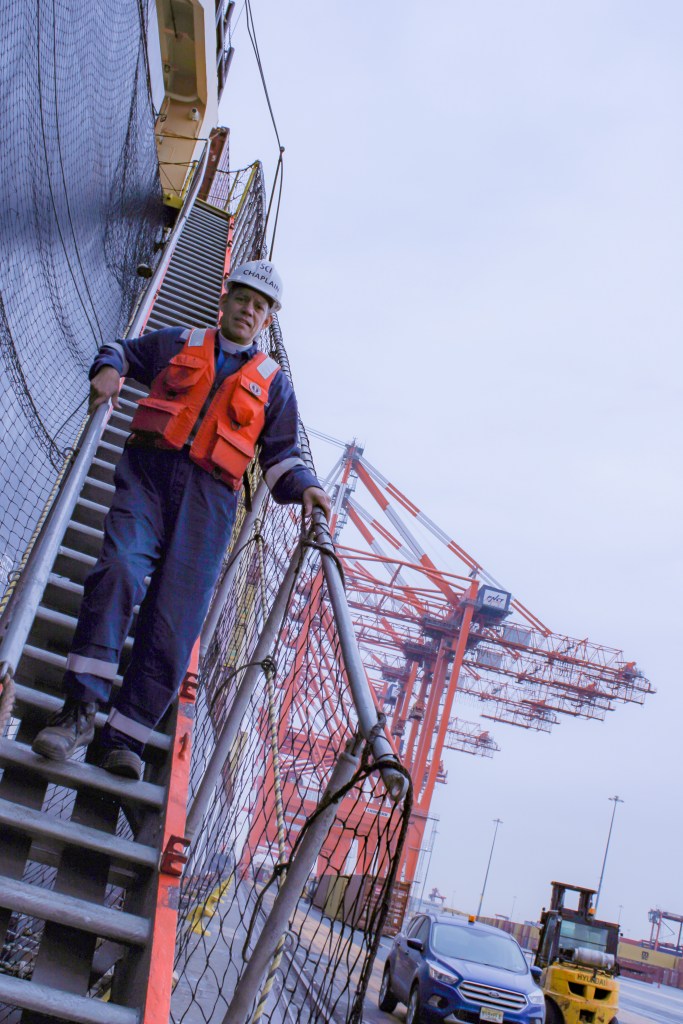
Here is where the work of SCI’s chaplains comes in. Chaplains at the Center daily board many of the vessels that come into port in order to check on the well-being of seafarers, since so many of them are unable to secure shore leave, or have only a short amount of time they are allowed off their vessel.
Container ships docking at Port Newark and Elizabeth generally stay in port for 18-24 hours. Bulk ships and tankers may dock for two to three days. During that time, crew members who are eligible may be able to come ashore on leave. A recent study of the average shore leave for seafarers revealed that over a nine month period, most seafarers are afforded shore leave
twice, for an average length of 3 hours at a time. That means for a total of 9 months at sea, some mariners are able to step onto land for a total of only 6 hours. Declines in duration and availability of shore leave threaten the welfare of maritime workers who already work long hours in tough conditions and who must execute fast port turnaround times for the vessels on
which they reside. The International Labour Organization continues to advocate for shorter contract periods for mariners to be at sea.
What do seafarers do in the three hours of shore leave granted in the Port of Newark? SCI’s port-based chaplains and social workers strive to make seafarers’ port stays efficient and soul-satisfying by offering multiple services directly to the men and women who serve on ships. Via the ISC’s work, SCI caters to the spiritual and emotional needs of seafarers, as well as assisting with legal issues through SCI’s Center for Maritime Advocacy, headed by Phil Schifflin, Esq. Attorneys at The Center for Maritime Advocacy undertake pro bono legal work on behalf of individual mariners and also legal advocacy, representing the rights and needs of mariners on a global scale.
SCI may assist seafarers with banking and money transfers to relatives back home, and direct seafarers to where they may purchase goods the crew want for themselves or their families. Crew members are welcome to visit the ISC to make phone calls and connect to the Internet, talk with clergy or other SCI staff, work out in the gym or basketball court, play foosball, pool, or
ping pong, or simply relax in a tranquil setting. Others choose to leave the premises to shop, go into New York City, or eat at a local restaurant.

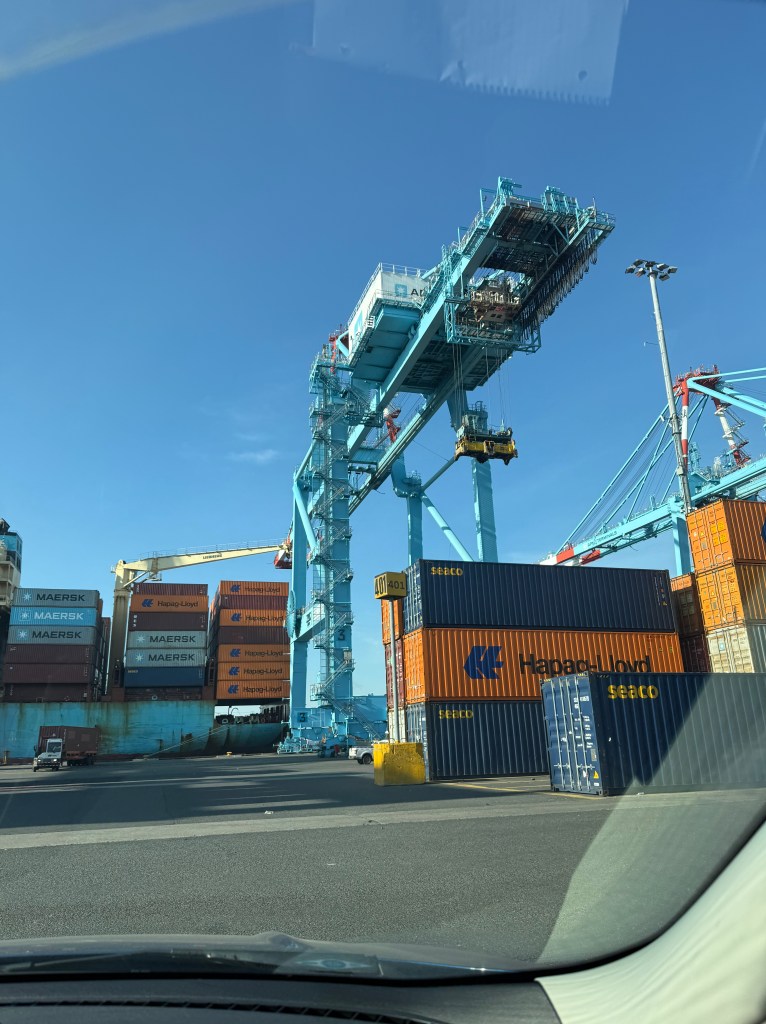
First photo courtesy of Seamen’s Church Institute, second and third photos by Linda Morgan
The Reverend Dr. Bill Allport, ordained in the Episcopal Church for 24 years, has for the past three years served as a Staff Chaplain at SCI’s ISC. He explains that “about 75% of those on leave want to shop, as prices and items are more accessible in America than in other places. Twenty five percent want to go to Times Square or to see the Statue of Liberty.” It’s convenient that the Jersey Gardens Mills Mall is situated right next to the Port of Newark and Elizabeth. Applebees, right across from the mall, is a popular destination, and crew will shop at the mall for shoes and clothes or hail a ride to visit Best Buy or the Apple store for
electronics and tech ware. ISC provides van service and will also help arrange transportation in the region for crew that want to go to New York City or shop outside the Port area.
“Crew members are shopping for necessities, as well as moments of celebration and joy,” Reverend Allport says. He described taking a Polish seafarer to a special Polish provisions store in Brooklyn so he could buy a huge supply of meat to bring back for the crew to celebrate Easter. Remembering that he accepted a taste of the seafarer’s supply, he said, “It was delicious. The challenge for that crew member, of course, was how to refrigerate so much meat for the two weeks leading up to Easter.”
A longstanding tradition of the ISC, and of SCI overall, is the Christmas at Sea (CaS) program headed by Joanne Bartosik, which has been in existence for 127 years. Volunteers from around the world knit hats and scarves to deliver to seafarers during the period between Christmas and Epiphany. Director Morse describes “Port Packing Day,” as “one day during the calendar year
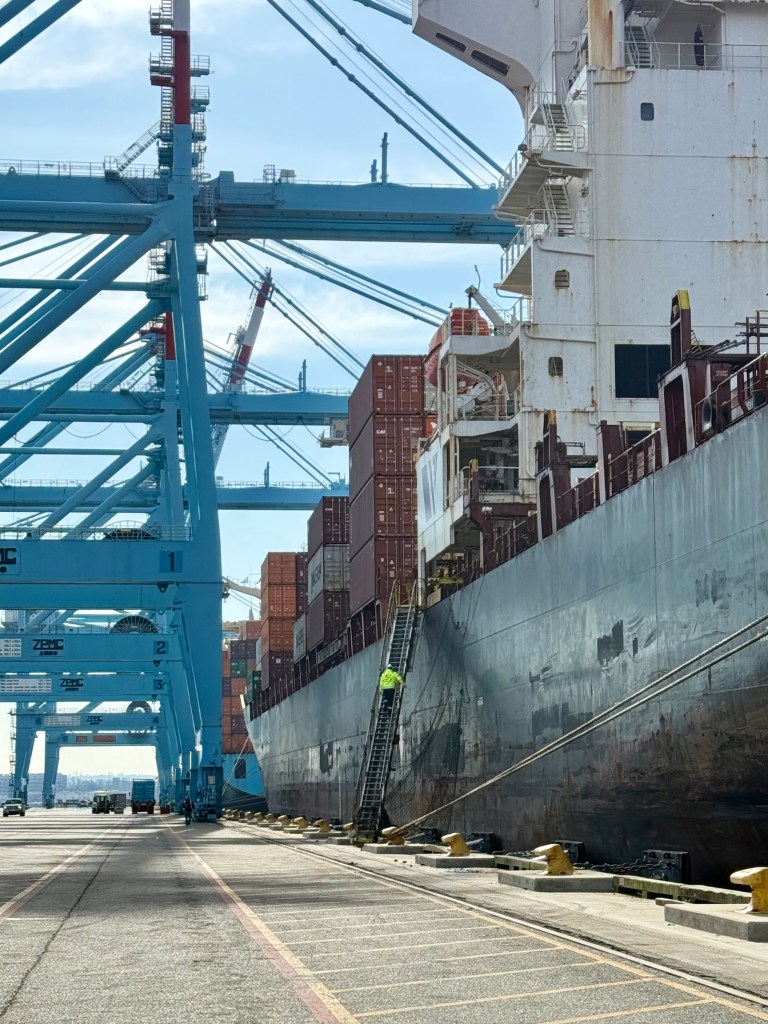
when multiple organizations visit the ISC to pack ‘ditty bags’ filled with hand-knitted hats, scarves, and gloves, as well as candies, toiletries, and small puzzles and games.” Chaplains and ISC staff members personally deliver the presents aboard ship, carrying large plastic bags on their backs like Santa Claus, as they ascend steep ladders alongside vessels’ hulls in order to
deliver gifts to crew members docked in the port.
This past Christmas, over 25,121 crocheted, knitted gifts and volunteer-filled ditty bags were contributed by 748 individuals in the U.S., Belgium, Canada, Italy, and the United Kingdom. In Port Newark alone, these gifts were distributed aboard 170 vessels. At other SCI locations, over 11,400 gift bags were delivered to mariners serving on inland waterways.
Reverend Allport recalls that he was recently greeted aboard ship by a sailor who announced that he’d worn his knitted cap for 40 years. Director Morse adds, “It’s important that all crew members are recognized during the holidays.”
First photo courtesy of Seamen’s Church Institute, second photo by David Rider
SCI employs three full-time chaplains (inclusive of a licensed social worker), and each week gratefully accepts the gracious volunteer efforts of several Chaplain Associates, to provide spiritual and emotional support to mariners on ships that arrive in the various terminals throughout the Port of New York and New Jersey. Reverend Allport, his colleagues, and regular volunteers visit four to six ships a day, speaking with as many as 200 people a week. To conduct a vessel visit, they climb a narrow, tall metal ladder that stretches multiple stories from dock to deck, sign in with the ship steward, then travel a dimly lit narrow passageway to meet seafarers wherever there is space: in a conference room, the crew mess, ship’s office, or sometimes in a
designated smoking room.
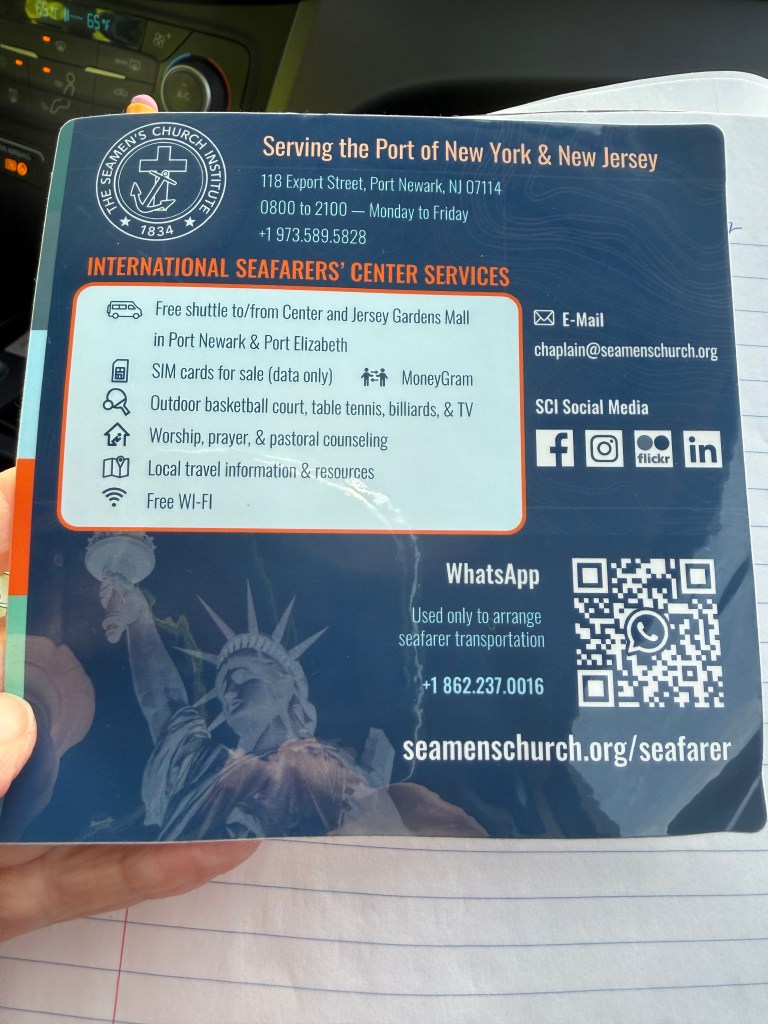
“I always ask, is everyone here okay, is anyone having a hard time?” Reverend Allport says. He carries printed cards with directions to the ISC and information on how to arrange seafarer transportation, along with key phone numbers. He offers information on where to bank or shop and generally checks on the welfare of the crew. “I might talk with a mariner whose hand
was smashed by a container and who says, ‘stuff just happens.’ I explain that that is not normal and that resources are available to support their safety and health.”
Reverend Allport and his colleagues are trained in crisis and stress management protocols and can provide advice on security, medical, and spiritual matters. “Seafarers’ issues often stem from extreme loneliness, separation from family and the larger world,” he explains. “With so many days at sea, performing routine tasks, they can feel disconnected from their former lives, even time zones.” While his visits aboard ship may be brief, without opportunity or time for follow-up, Reverend Allport says that he tries to “speak and be unrelenting, in the moment,” providing an invitation for reflection and camaraderie.
Meeting the men and women who serve on ships, as well as those who show up every day at the ISC to provide spiritual and emotional support for seafarers is a humbling experience. A visit to the ISC gives a new perspective on where our goods come from, as well as the sacrifices seafarers make to bring us all that nourishes us and entertains us, on demand and according to our every whim.
“Our goal is to put faces on an invisible economy,” Director Morse says. “We want the general public to visit us at the ISC, and to learn about the mission of SCI, because most people don’t understand where their goods come from or the human cost associated with those goods. They don’t see the human face of commerce.”
“There’s sea-blindness in the world,” Reverend Allport adds. “Ninety percent of what we have, what we consume, comes across the water from someplace else. We rely on mariners to sustain us. How do we honor their humanity?”
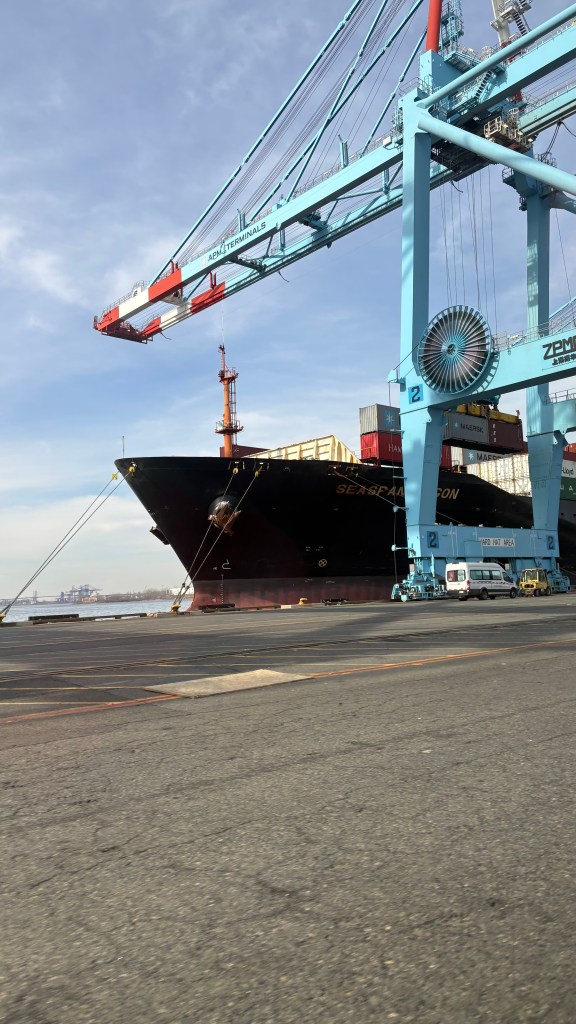
Photo by Linda Morgan
The men and women of SCI strive every day to put a human face to the industry and business of
maritime commerce. Their advocacy and generosity bring dignity to the work of transporting, transferring, and delivering the many products we consume.
Reverend Allport says that one of the great burdens of the world is that we’ve lost the theology of work. “We have a lack of respect for work,” he says, “Work allows us to be creative, productive, versus having an attitude, ‘I’ll do everything I can NOT to work.’ When Pope Francis talked about our culture suffering from a “globalization of indifference,” he described an attitude that has become, “What does it matter to me what happens to others? I’ll defend myself.”
In defense of the seafarers, they deserve better. At the very least, they deserve our respect.
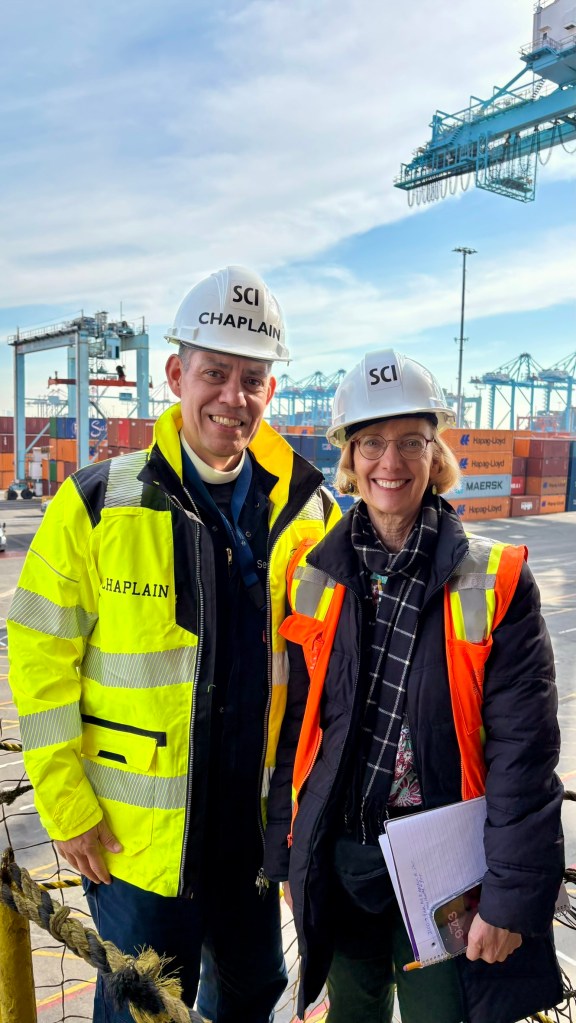

First photo by Philip Haws, second photo courtesy of Seamen’s Church Institute, third photo by Linda Morgan
Linda Morgan is an urban planner and writer. In the mid-1990s she served as project manager of the
redevelopment of the former Elizabeth municipal landfill into the Jersey Gardens Mall. The International
Seamen’s Center provided refuge from the noise and chaos of landfill reconstruction, where 30 years
later, Linda was delighted to rediscover SCI’s mission and to sing carols with former “Sludge Sister” Beth
Ann Rooney, now Director of Port Operations at the Port Authority of NY and NJ. SCI and the ISC will be
featured in Linda’s upcoming book, “100 Things to do in Newark Before You Die,” 2 nd edition, to be
published in 2026 by Reedy Press.
Featured image by Linda Morgan

